
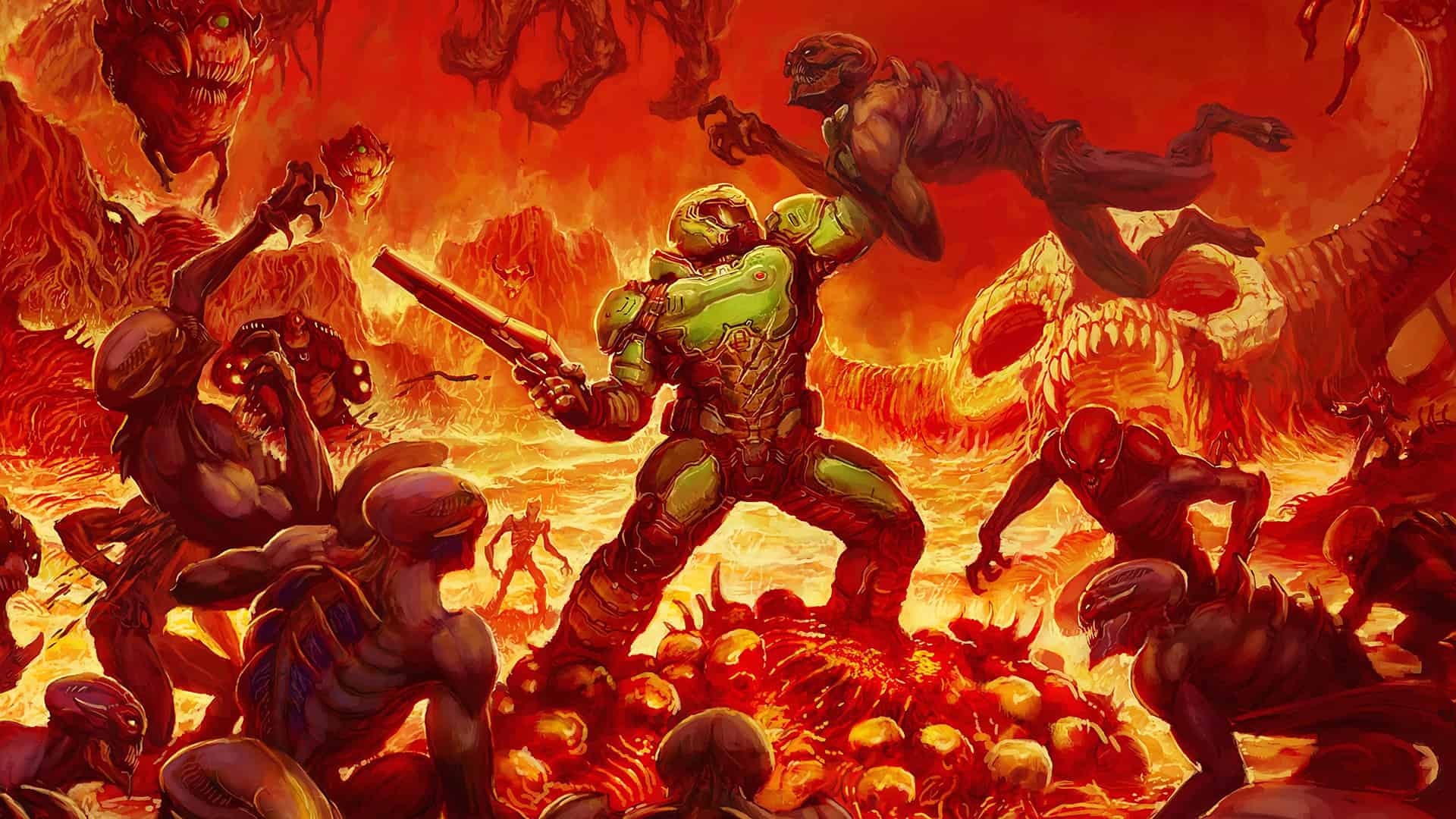
Photo credit: Wolf’s Gaming Blog
It’s rare for video game music to break free from the niche it’s confined to and cross through to other areas of entertainment. Of course, you have the iconic tracks that everyone will recognise – Super Mario Bros. 1-1 or Halo’s classic theme tune but it is unheard of that a whole video game soundtrack would change the architecture of a whole genre.
But – that is exactly what Doom 2016 did when it released exactly 10 years ago. When it released it made waves around the whole metal community and significantly impacted the modern metal landscape we know today. So, how did a series of games already known for its incredible soundtracks break the confines of video game media and become a landmark in heavy music even influencing how modern metal is produced and consumed 10 years on? This is how Doom went from games featuring incredible soundtracks to inspiring an entire whole music genre named after it with everything in between.
The Legacy Of The Cult-Acclaimed First Person Shooter
Before the release of Doom 2016, there was already a strong relationship between metal culture and the first-person shooter. Developed by id Software, the first three Doom games (1993-1997) were revolutionary at the time for paving the way for modern first-person shooter games. Of course, the soundtracks for these games are not as hard hitting as its successor but it dabbled with metal influences. Often adapting and taking inspiration from heavy metal or thrash riffs by bands like Metallica and Pantera. In fact, Pantera’s ‘Mouth For War’ and ‘Rise’ heavily influenced tracks like ‘E3M1’ from Doom 1993.
At its core Doom’s identity has always been tied to metal, with tracks taking a direction that thrives on sounds of aggression and speed. Despite the original games and soundtracks suffering from hardware limitations by not allowing original composer Bobby Prince to fully explore complex atmospheres and sounds, the framework was already there for Doom 2016 to evolve the sound into a cultural phenomenon.
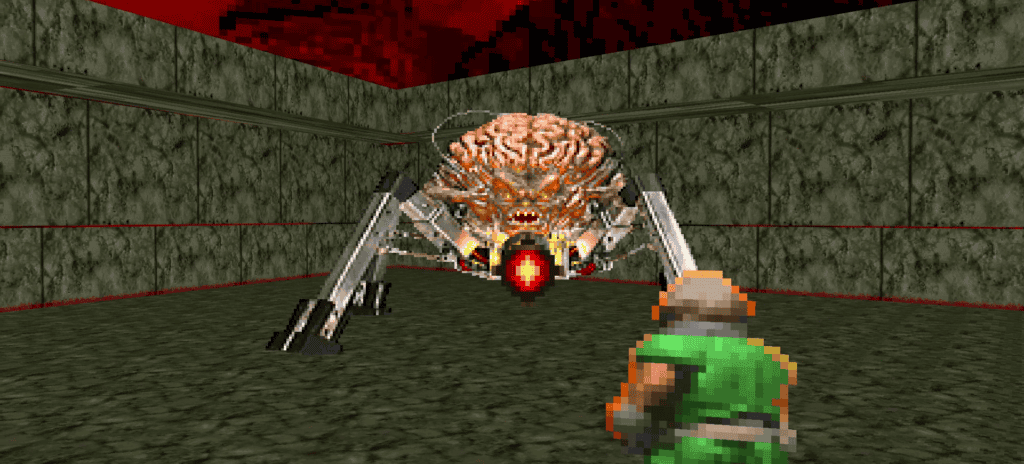 Doom 1993 gameplay – Photo credit: Bethesda
The Master At Work
With the framework for an epic soundtrack already there from previous games, it’s important to understand what id Software wanted to create for Doom 2016. They needed a unique, heavy sound that bridged the gap between iconic soundtracks and worldwide success.
Thus, they hired Mick Gordon. Gordon was already known for his innovative approach to video game sound design by using his own instruments and sounds to build iconic musical worlds. His past work saw him toying with distorted soundscapes on the Wolfenstein series and working on intense character themes for fighting game Killer Instinct.
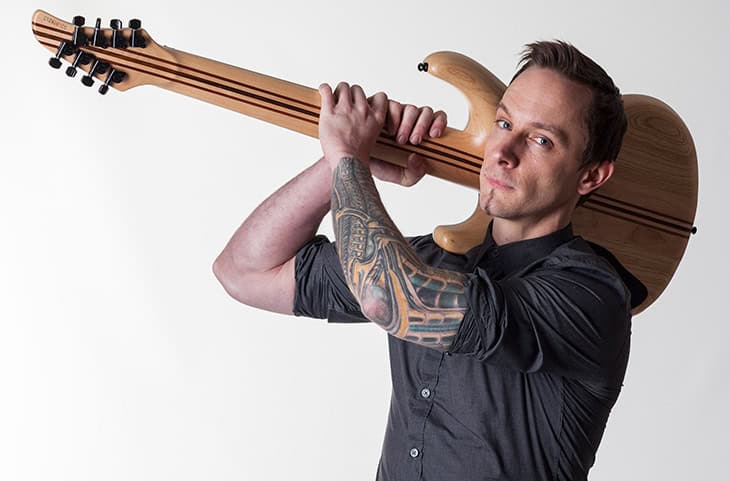
Photo credit: Aldona Kmiec
Despite his experience working with heavier sounds and creating dystopian soundscapes, id Software’s original vision for Doom 2016 wasn’t a heavy one. The original plan for was for guitars to be completely absent and the soundtrack to derive sounds from electronical influences with a synth-based score to make it sound edgy and different. It wasn’t untilGordon confronted the id Software officers working on the game that they opted for a heavier sound that had a huge focus on guitars. A decision that would change the course of metal history.
Gordon even quoted the lack of guitars in the original framework for Doom 2016 in a Fandom interview with James McMahon:
“When I started onDOOM, there was real resistance to guitars, because the thinking was that they were very eighties and they felt it dated the game.”
So, when Doom 2016 released on May 13th exactly 10 years ago today its soundtrack changed metal music as we hear it now – but how, what made it so different and unique?
At the time, Gordon’s production philosophy was incredibly new and fresh. His ability to combine 8-string guitars with a plethora of djent and industrial influences sounded fleshed out and polished. The wildcard was the synths. Incorporating synth segments into tracks against the distortion of heavy guitars was something that modern metalcore bands weren’t doing at the time. Combined with deeply layered production techniques and a dynamic soundtrack that reacted to the player’s gameplay, it was a recipe for perfection.
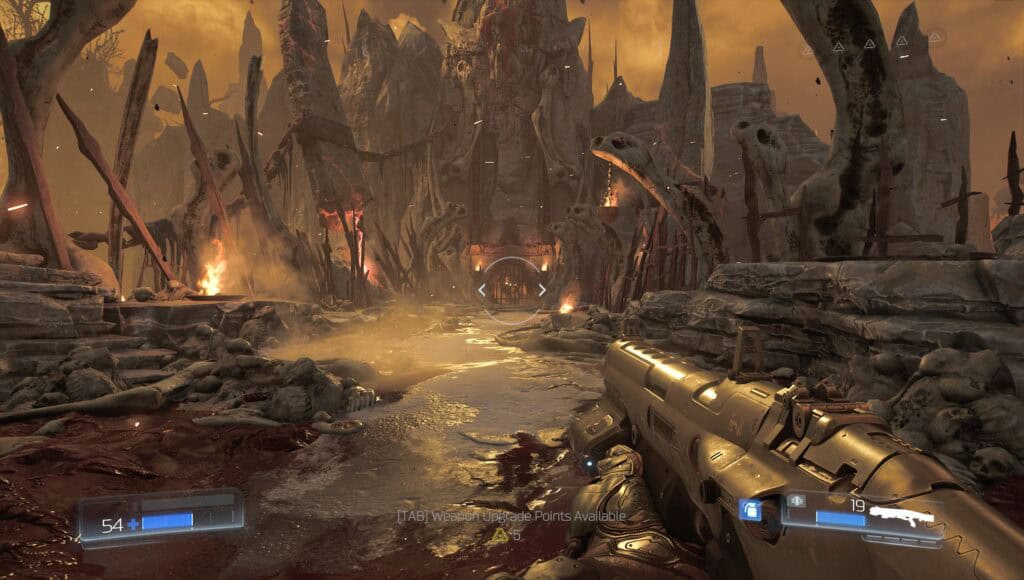
Doom 2016 gameplay
Photo credit: Ars Technica
Take the track ‘Rip and Tear’ as an example. It is one of the most iconic tracks from the game that perfectly encapsulates what Doom 2016 does best. It is adrenaline filled from the get-go blending fast paced guitar riffs with an ominous industrial sound. It introduces the electronic elements and synths to elevate the track to new heights. It is the epitome of Gordon’s compositional skill and creativity and is something that modern metalcore bands would adopt years after release.
The soundtrack became a driving force for Doom 2016’s popularity and success. It’s a triumph not just in video games but its cultural importance, helping the game sell over 2 million copies. At a time where AAA games had soundtracks that started to lean more to orchestral sounds and realism, Doom 2016 completely flipped the script. The score’s rawness, interactive soundtrack with emphasis on heaviness and aggression shot it into the stratosphere – surpassing Sony and Naughty Dog’s Uncharted 4, dethroning it to take #1 in the UK charts upon release.
Impact On Modern Metal
Prior to the release of Doom 2016, modern metal was in a sort of dry transitional state during 2015. The genre was experiencing a shift from the outdated crabcore bands and material started to sound dry and unimagined. There was not much mainstream reach towards metal at this time with it struggling to break out of the bubble it was confined to. Critics would argue that bands were starting to sound generic and repetitive during this period and despite efforts from bands like Bring Me The Horizon releasing electronic and polished works like 2013’s Sempiternal, there was not a lot of buzz around the metal scene at this point.
Of course, Doom 2016 and Mick Gordon’s take on metal was innovative and creative during this stale period. It was a completely fresh take on the metal genre and something that bands simply weren’t doing at the time. This new and bold approach breathed life into a genre when it needed it most. It first took the internet and the metal community by storm. Its popularity started with metal fans releasing covers of the Doom 2016 soundtrack on YouTube, then it became popular to listen to it in the gym, then the wave of memes and edits and so forth. Its rising popularity then started to catch the attention of metal bands and artists who were desperate to try new creative projects that would set them apart from other bands. It ignited a revival.
One of the pinnacle moments to the rise in the soundtrack’s popularity was the moment that brought together the video game and music world. At the 2016 Game Awards, Doom 2016 was the winner for best video game for music and sound design. To celebrate the victory Mick Gordon teamed up with Periphery drummer Matt Halpern to deliver the track ‘Rip and Tear’ to a live audience at The Game Awards, bringing the soundtrack to life. The video has now garnered 12 million views on YouTube.
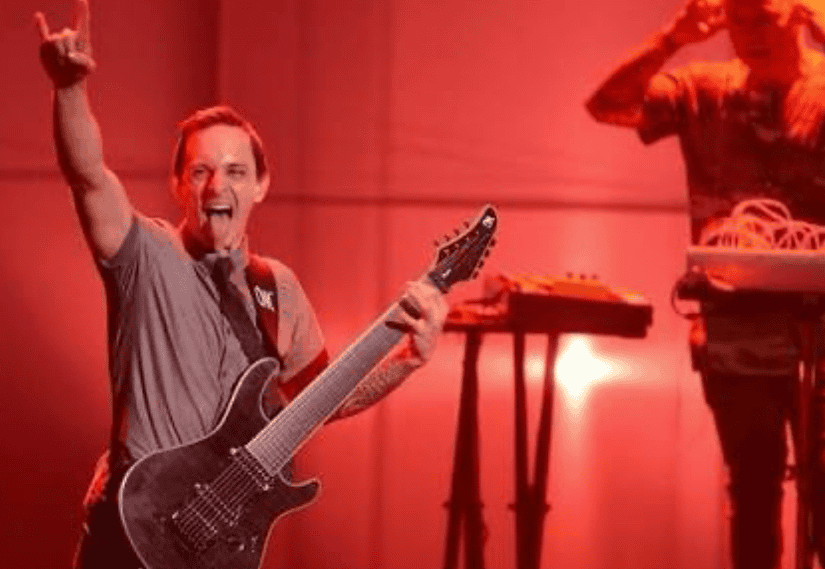
Mick Gordon performing Doom 2016 live at The Game Awards
Photo credit: Gamespot
Once bands started to notice and praise Gordon’s work on the score of Doom 2016, it began to influence modern metal bands new material. His signature sound can be heard throughout the whole modern metal genre even today.
It wasn’t until a few years after the release of Doom 2016 that bands began to adopt the sound which is likely due to the soundtrack being so ahead of its time but once bands caught on, Doom 2016’s influence spread like wildfire. It first started with bands like 3TEETH, their 2019 album ‘METAWAR’ is frequently noted for a sound that alludes to inspiration from Doom 2016’s industrial sound. Then came Fear Factory’s 2021 album ‘Aggression Continuum’, an album that thrives off Doom’s mechanical and synth elements combined with chugging guitar riffs. The list goes on and on.
This metal resurgence opened many doors for Gordon himself. Due to his work and signature sound on the Doom 2016 soundtrack, he began to work with some of modern metalcore’s biggest names. He contributed to the production of Architects’ 2023 single ‘Seeing Red’ and even featured on Motionless In White’s 2022 album ‘Scoring The End Of The World’ with the title track of the same name.
Gordon’s most notable contribution to modern metal came with his collaboration with Bring Me Horizon on their 2020 album ‘Post Human: Survival Horror.’ Frontman Oli Sykes became inspired by Gordon’s work on the Doom soundtrack and eventually reached out to him to work on tracks ‘Parasite Eve’, ‘Obey’, and ‘Kingslayer’ for the record, bringing his signature sound to the album.
“A guy called Mick Gordon produced all this music, at first when we were writing Parasite Eve, I was referencing a lot of this Doom game.”
“I was playing it in the day then working at night and using Doomas references because the sounds on the game sound so huge and so hitting in a way I’ve never heard before in any other metal music.”
“Then it dawned on me, maybe Mick Gordon is the guy we’re looking for to collaborate with.”
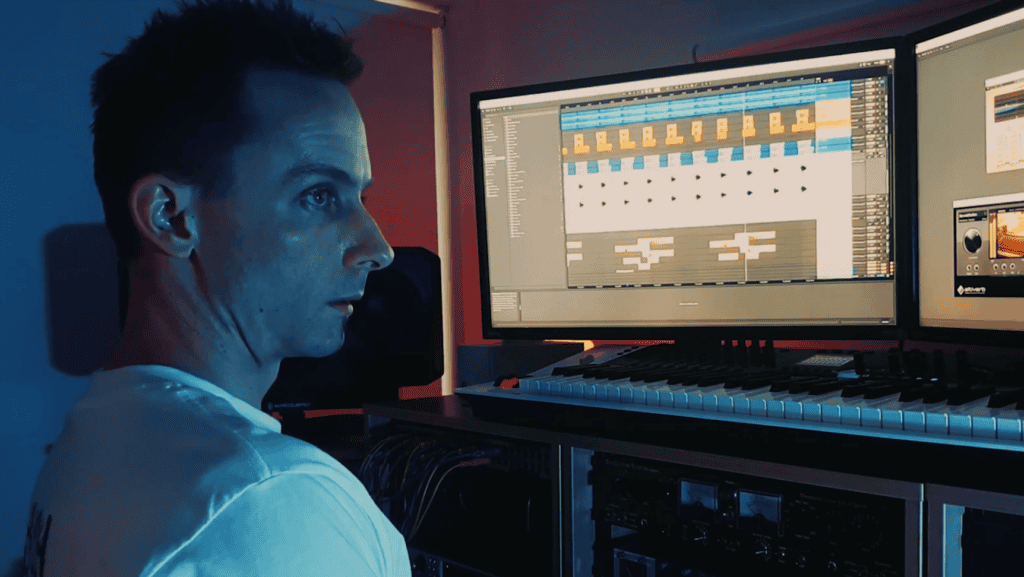
Gordon producing ‘Parasite Eve’ for Bring Me The Horizon’s Post Human: Survival Horror (2020)
Photo credit: Bring Me The Horizon
Gordon’s industry level success lead to metal fans popularising his signature sound from Doom 2016 and creating it into its very own genre. Argent metal, named after the power renewable energy source found in the game, it’s a genre that encapsulates the violent energy of Gordon’s sound combing djent and industrial metal with electronic sounds. It’s a nod to the incredible work Gordon did on Doom 2016 and the number of bands, artists and fans he inspired.
Exactly 10 years on from the release of Doom 2016, Mick Gordon’s iconic soundtrack still ripples through modern metal today. A score that transcended the boundary between video game and music entertainment, it influenced metal on a worldwide scale and completely revitalised a genre that was in dire need of new and innovative ideas. From metal within Doom being mere samples and restricted due to hardware limitations back in the 1990s to reinventing and taking an entire genre by storm and reshaping its modern architecture, the impact Doom has had on modern metal will be remembered forever.