

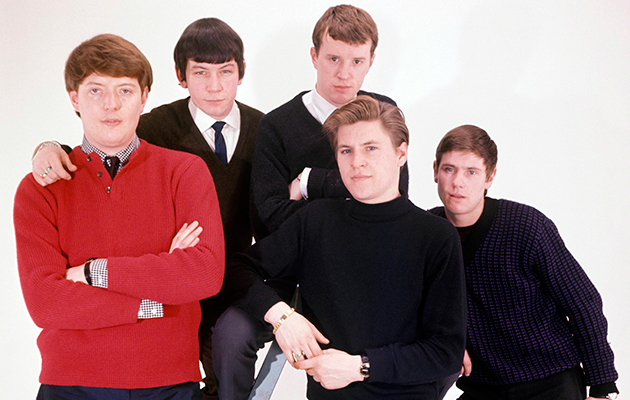
Originally published in Uncut, November 2013
Last year during his keynote speech at SXSW, Bruce Springsteen announced that “We’ve Gotta Get Out Of This Place” was “every song I’ve ever written. All of them.”
Springsteen, who has been performing The Animals’ 1965 single for decades, most recently this summer in Cardiff with Eric Burdon, is far from alone in recognising himself in a powerful, protean anthem to personal transformation. This portrait of the tyranny of work, the lurking shadow of death and the desperate desire to escape to “a better life” has spoken to generations. Troops serving in Vietnam, both Gulf Wars and Afghanistan have found perennial solace in its message, as have bored teens, and any number of working-class would-be pop stars from the provinces.
“That song was about us,” says Burdon. “We wanted to get out of Newcastle, then a year later it was London, and then it was New York. We were on a mission. But it also made sense to everybody, because things back then were changing so much.”
The song started life as a modest piece of escapist folk-pop, written by Brill Building husband-and-wife team Barry Mann and Cynthia Weil. Originally intended to launch Mann’s solo career, it was swiped by producer Mickie Most. He brought it to The Animals, who turned it into their second biggest hit.
The combination of Chas Chandler’s propulsive bass, Burdon’s blues wail, the tightly wound tension of the verse and explosive release of the chorus sounds as potent today as it did nearly half a century ago.
The Key Players
Eric Budon (Vocals)
Hilton Valentine (Guitar)
John Steel (Drums)
JOHN STEEL: We were looking for a new single. It was Mickie Most’s habit to go over to the States and raid the Brill Building, not just for The Animals but for Herman’s Hermits and people like that. The year before he’d brought over the first single we ever did, “Baby Let Me Take You Home”, which to us was just a new version of “Baby, Let Me Follow You Down” from the first Dylan album. It was a bit on the poppy side, but it did the trick. Mickie was very shrewd. He had a cracking judgement for a hit song.
HILTON VALENTINE: Mickie’s greatest input to The Animals was the material that he picked for us to record. The verbal deal we had with him was that he would pick the singles and we would have free rein on what went on the albums, although “The House Of The Rising Sun” came from us. The singles were usually presented to us only a couple of days before we went into the studio. Mickie came up with a few specimens from his latest visit. I can’t remember the others, but “…Place” stood out for us and we went with it.
ERIC BURDON: There were always songs coming back and forth to us. Sometimes we’d say, “No, that’s more like Herman Hermits.” Sometimes we’d wait too long and someone else would do it before us. With this one, I think we all knew right away it was right for us.
VALENTINE: The demo was pretty basic. I think it was just Barry Mann playing and singing the song on piano.
BURDON: The demo was that West Coast singer-songwriter thing. Barry was playing it alone, serenading. It was much more folky, but straight away it made sense.
STEEL: The words are what sold it for us. We could honestly identify with the sentiments of the song. We were all working-class Geordies, and Tyneside in the ’50s when we were all teenagers was a pretty grubby place: coal, steel, shipbuilding. Every building was black, when it rained there was a kind of black slime on the pavements. So we could really identify with the words. Once we got down to London at the end of ’63 that was our first experience of living in another city, then travelling to New York in ’64 was like a dream come true to us. That idea of social mobility had just become possible for working-class lads like us.
VALENTINE: It was pretty obvious that it worked. We were quite unanimous that it was a great song. It had biting lyrics that weren’t bubblegum, they had meaning and depth to them. It’s definitely a working-class background kind of song.
STEEL: We tried to avoid getting involved in mainstream pop songs. We thought it was a good hard-edged song – a dark story, like “Don’t Let Me Be Misunderstood” and “It’s My Life”. So it suited us perfectly.
BURDON: Back then we thought we were on a crusade. We thought we were bringing something special to people.
VALENTINE: The arrangements were left up to us. Everybody would chip in when we went into rehearsals and ran through the number. With everybody’s input it just grew from the original, basic idea. We were road-tested, well-oiled. We would run through it in a rehearsal room a few times and then we’d be ready.
BURDON: We recorded it at De Lane Lea studios, down in this basement in central London. It was Churchill’s old map room, one of his emergency rooms during the war. The recording was pretty much down the line. We were very sure of ourselves, we didn’t need much producing. Mickie Most has become this big legend, but he was learning on the job, really. I’m not doing him down, but he didn’t have to do that much with us. In the beginning, he’d say to Hilton, ‘Oh, you’ve messed up the guitar, you’ll all have to do it again.’ He didn’t even know that we could overdub! Chas would have to tell him.
VALENTINE: Mickie did very little. In the studio he just stood and listened while the engineer [Dave Siddle] did the work. He might occasionally suggest something, but back then he was not a hands-on producer.
STEEL: It was our first single after [keyboard player] Alan Price left. Eric and me had worked with Alan on and off since 1959, we were the core of The Animals, so it was a bit of a wrench, but at the same time it has to be said that Alan was a hard guy to get on with. There was a certain amount of relief.
VALENTINE: Oh, it was volatile – many, many ups and downs, a lot of arguments, going at each other hammer and tongs. We were working so hard, in each other’s pockets all the time with constant touring. It was fun but it took its toll. It made us tired and irritable. And there was still plenty more tension to go around after Alan left!
STEEL: We knew Dave Rowberry from way back. He slotted in very easily. He was a better musician, technically, than Alan, he was more sophisticated, so we moved on without a hitch. And we got on well with him.
VALENTINE: We thought Dave was really the perfect replacement for Alan Price. They were the same type of players, with jazz backgrounds. Plus they had the same haircut – very important!
BURDON: With Dave it became a bit more melodic. He brought in that lovely little melody line on the organ behind one of the verses. I’d forgotten about it but with my new band I get our keyboard player to do that.
STEEL: On Wikipedia it said [session drummer] Bobby Graham claims to have played on “We’ve Gotta Get Out Of This Place”. The cheeky bastard! I’ve no idea where that came from.
BURDON: John definitely played on it. We never had any session musicians.
VALENTINE: All of our recordings were very fast. It wasn’t multi-track, there were two half-track machines. The only overdub that happened was Eric’s vocal – he would do a guide vocal in the sound booth and we could hear him singing in our headphones, but it wasn’t being recorded. As the engineer was playing back what we had recorded on one machine Eric would record his vocal on top of that. The most takes we would do was generally four or five, then it’d be out within days. Two versions were released, one in the UK and one in the US. They’re quite different. I think you can tell by the words and vocals.
BURDON: I changed the lyrics. I always do that, I can’t help myself! That’s the way it is with me, you’re not going to get the same lyric.
STEEL: Within a week of recording it we were on Ready Steady Go! with The Hollies and Donovan playing the song live. They always liked us on RSG! because we could play live without making a fool of ourselves.
BURDON: We shot a piece of film of us performing “…Place” on 35mm upstairs in some whorehouse in Soho at about nine in the morning. We were all out drinking the night before, we looked terrible!
STEEL: Very quickly the song became very popular. The only reason it wasn’t our second No 1 was because of the competition. “Mr Tambourine Man” by The Byrds was No 1, and we were hanging around waiting for that to drop, and then The Beatles released “Help!”. You couldn’t fight The Beatles in those days.
VALENTINE: It always went down great live. Fans’ interpretations were very varied. It had a great hook – when we played it people would sing the chorus. I always enjoyed playing it.
BURDON: It’s adaptable. I’ve played that song so many ways with so many different bands. It has that great pad, that pulse. It changes so many times in concert.
STEEL: At first it just seemed like a good commercial record that we wouldn’t be embarrassed about. We never thought at the time that it would become this anthem that would be adopted by the US troops in Vietnam.
VALENTINE: We only realised its impact after the band had split [in 1966]. We reformed in 1976 and did a world tour, and it was only then we realised the profound effect it had on US forces in Vietnam. We were meeting vets backstage who told us the song got them through Vietnam. It was No 1 on the American Forces network for years.
BURDON: I’ve had guys come up to me and tell me that I saved their lives, people I’ve never met. Guys who went out on a patrol for a few hours and came back to the camp and found all their friends had been blown up. It was Vietnam, and then it was Iraq. That song means so much to people.
STEEL: I talk to squaddies on the road even now and they come up to me and say that they listen to that song in Iraq and Afghanistan. But it’s also this anthem that kids sing when they leave school. It has hung about – all these resonances pop up. Springsteen was on a major tour last year and he gave us loads and loads of Brownie points as one of his major inspirations. He said “…Place” was his whole bag! Very nice of him.
BURDON: In the last couple of years I’ve been up onstage with Springsteen a few times and he always wants to play that song. Yeah, it’s nice.
VALENTINE: I’ve still no idea what the writers felt about it.
BURDON: We never got any feedback from Mann and Weil, except I was in my doctor’s office once and this pregnant lady was sitting next to me. I had no idea who she was. The bell rang and it was her turn to go in to see the doctor, and as she walked across the room she came over and said [in a disdainful New York whine], “You know, me and Barry hated what you did with our song.” I said, “Pardon me!” That was in the ’80s, in Hollywood. I’ve told that story to guys who knew them personally and they’ve said, “Oh yeah, he was so pissed off, because he was starting his own career as a singer with that song.” I thought, ‘Why the hell did they ship it out to us, then?’ Complaining about having a hit and making a fortune and having something meaningful that has lasted. Isn’t that why you write songs in the first place?