


There is a slightly uncomfortable lesson hiding inside this weekend’s box office numbers.
For years, Hollywood has talked about the theatrical audience as if the safest bet was always bigger noise, bigger scale, bigger IP. More superheroes. More monsters. More action. More universes. Yet the first real jolt of the summer did not come from a cape, a creature or a city being smashed to pieces.
It came from Miranda Priestly.
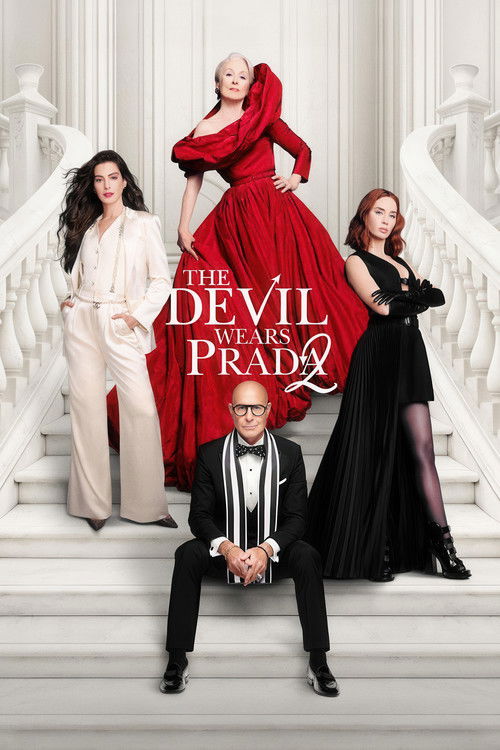
The Devil Wears Prada 2 opened with an estimated $77 million in North America and $233.6 million worldwide, a launch big enough to turn the sequel into one of the season’s first major box office stories. That is not a polite comeback. That is a statement.

The film pushed Michael into second place, although the Michael Jackson biopic is not exactly struggling. It still brought in around $54 million in its second weekend, which would be a headline result for most films. But this weekend belonged to The Devil Wears Prada 2, and pretending otherwise would miss the bigger point.
This was not just nostalgia doing its usual work. It was a reminder that a certain kind of audience, especially adult women and millennial viewers, can still turn up in serious numbers when Hollywood gives them something that feels like an actual event.
Why Did The Devil Wears Prada 2 Open This Strongly?
The easy explanation is nostalgia. The more useful explanation is that this particular nostalgia never really went cold.
The original The Devil Wears Prada arrived in 2006, but it has lived a very long second life. People kept quoting it. They kept rewatching it. Younger viewers found it through streaming, clips, memes and endless online references. It became one of those rare studio films that feels lighter than it actually is: funny, stylish and glossy on the surface, but also sharp enough about work, ambition and power to keep meaning something years later.
That matters. A sequel like this does not have to drag the audience back into its world from zero. The world is already there. The audience knows the tone. They know the office politics. They know the pressure. They know the pleasure of watching Miranda Priestly enter a room and quietly control the temperature of it.

So when the sequel arrived, the marketing did not need to over-explain. It only had to suggest one thing: everyone is back, and the door to that world is open again.
That is a powerful advantage. Studios spend fortunes trying to manufacture that kind of attachment. Here, it had been building for almost twenty years.
There is also the part Hollywood still seems oddly slow to learn. Female audiences are not a side market. They are not a bonus. They are not something to chase only when a film is cheap enough to be considered “safe.” When the right film arrives with the right cultural charge, they can move the box office at blockbuster scale.
That is what makes this opening interesting. The Devil Wears Prada 2 did not simply prove that an old title still had value. It proved that this audience still has muscle.
Is Michael Still Holding Well?
Yes. Michael remains in very strong shape.
A second weekend of around $54 million is not the sign of a film fading away. After a big opening, a drop in the mid-40% range is a healthy result, especially for a musical biopic carrying both fan interest and wider public curiosity. Its North American total has now climbed to roughly $183.8 million, putting it among the year’s most important commercial performers so far.
The weekend is more interesting when the two films are not treated as enemies on a chart.

Michael is selling music, memory, celebrity and the complicated pull of a global icon. The Devil Wears Prada 2 is selling fashion, workplace tension, old character chemistry and a very specific kind of pop-cultural affection. They are not chasing the same emotional response. That is why the weekend feels healthier than a simple first-place, second-place ranking suggests.
The audience did not reject cinemas. It rewarded films that gave different groups of people a reason to go.
That should matter to studios. A market with only one kind of hit is fragile. A market where a fashion-world sequel and a music biopic can both do serious business is far more interesting.
What Does This Say About the Summer Box Office?
It says the summer season may not need to be as predictable as Hollywood keeps making it.
The phrase “event movie” has become too narrow. It often means the same things: huge visual effects, fan-service IP, loud trailers, familiar branding and a campaign built around scale. But audiences do not always define an event that way. Sometimes an event is simply a film people want to experience together before the conversation moves on without them.
That is where The Devil Wears Prada 2 found its sweet spot.
It was not the biggest spectacle in theaters. It did not need to be. The draw was the return: the actors, the characters, the attitude, the world. For a lot of viewers, buying a ticket was not just about seeing what happens next. It was about stepping back into a cultural space they already had feelings about.
There is an obvious comparison to Barbie, not because the films are the same, but because both underline a lesson the industry keeps needing to relearn. When a studio understands a female-driven audience and treats the release like a real cultural moment, the results can be enormous.
The mistake is assuming these films are exceptions. Maybe they are not. Maybe the exception has been Hollywood’s lack of confidence in making them feel big enough.
Can The Devil Wears Prada 2 Become One of 2026’s Biggest Films?
It has given itself a real shot.
With $233.6 million worldwide already in the bank, The Devil Wears Prada 2 is not just off to a good start. It is immediately part of the wider 2026 box office conversation. The international performance is especially important, because this was not a North America-only surge. A large share of the opening came from overseas markets, which gives the sequel a broader runway.
The next weekend will tell us a lot.
If it drops hard, the film will still be remembered as a major opening and a successful franchise revival. If it holds well, the story changes. Then it becomes something more valuable: a genuine summer runner.

The reported $100 million production budget means it still needs legs. Marketing costs and theatrical splits are not small details. But after a global start this strong, a finish somewhere in the $550 million to $650 million range no longer sounds wild if word of mouth stays healthy.
For now, though, the industry has already been given its warning. Hollywood kept asking what kind of movie could bring people back to theaters. Miranda Priestly walked in and answered the question without raising her voice.
Data sources: FilmDB.co.uk and TMDb. Availability of information may vary, and accuracy is not guaranteed.