

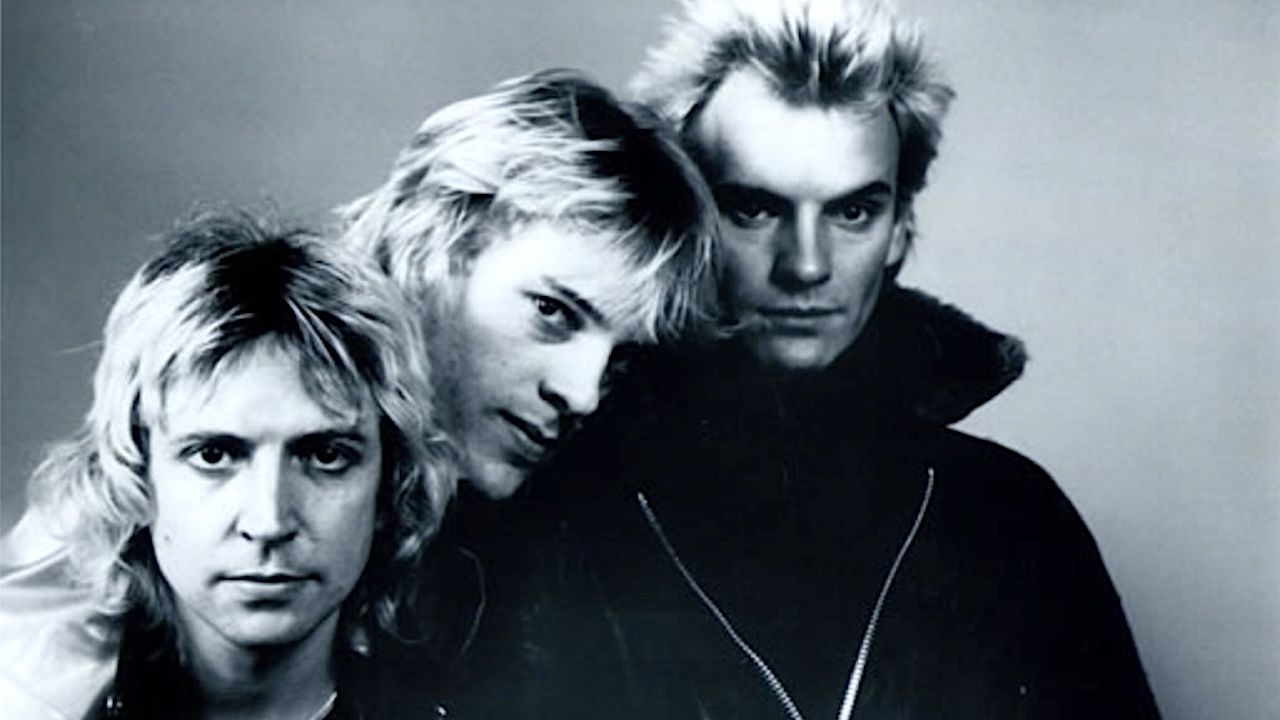
In the second summer of punk, Andy Summers, guitarist with The Police, had a houseguest. In the night’s small hours, downstairs in the living room, he could hear his bandmate, Gordon Sumner – nickname, ‘Sting’ – strumming the chords and singing the melody to a composition that would soon be known the world over as Roxanne.
In the tumultuous days of the Sex Pistols and The Clash, it was a brave move to title a song after a girl’s name. But emboldened by Elvis Costello’s pivotal 1977 single Alison, Sumner decided to press ahead. Hearing the music drifting up the stairs to the bedroom, Summers’ wife told her husband that their guest was onto something.
This reassurance may have come at a good time, because in the immediate aftermath of linking up with Sting and drummer Stewart Copeland in August 1977, the former Soft Machine/Animals guitarist might have been forgiven for harbouring a doubt or two about his decision. Management made a lot of promises to the trio before they embarked upon European shows in the autumn of 1977, none of which, the trio discovered to their immense irritation, were actually honoured.
“They’d done nothing,” Copeland told Melody Maker. “They hadn’t accomplished a thing, and we rehearsed in their studio for a month, maybe two months, waiting for them to get something together. There were no gigs, the group just disappeared off the scene. People were saying, ‘What happened to the Police? Are you still together?’ We’d blown all the momentum that we had and all the credibility that we did have was all gone, though at least by this time Andy had been worked into the group, because we’d had all that rehearsal. We were in a pit and one day we just decided, ‘Fuck these guys!’ and we loaded our equipment into our cars and just pissed off.”
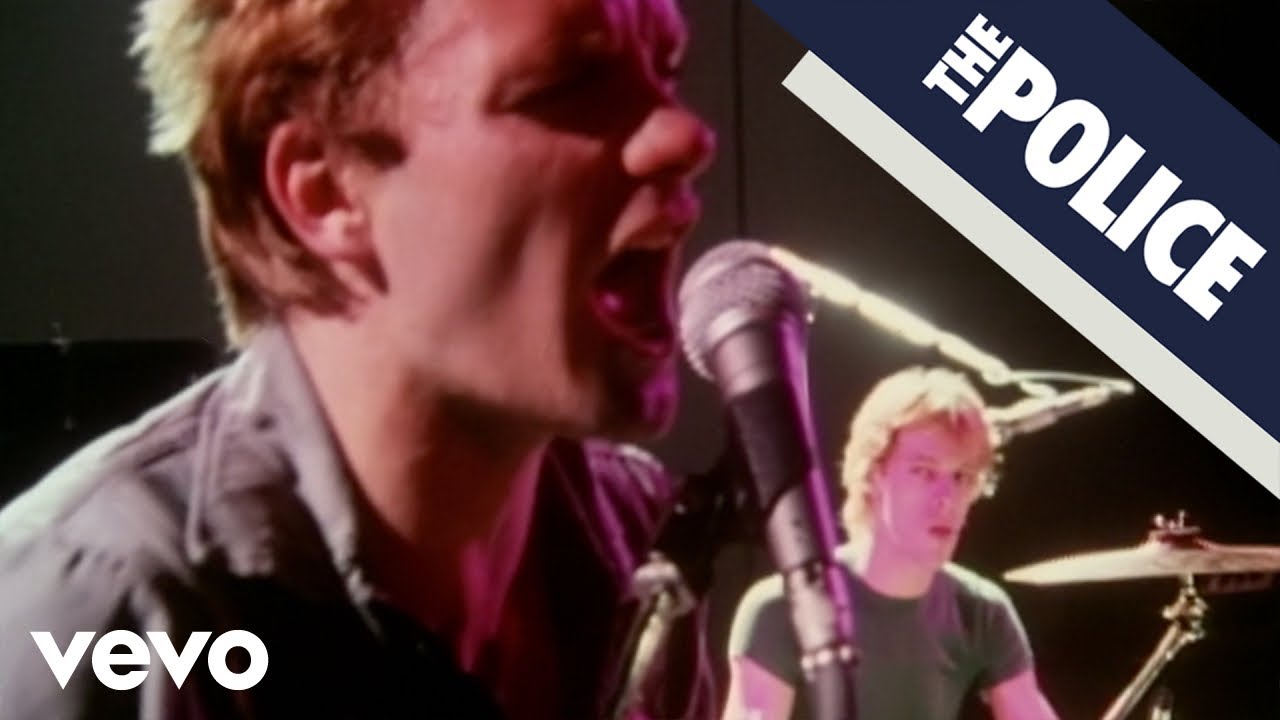
Global superstardom seemed far from assured in the trio’s early days. In fact, originally released on April 7, 1978, Roxanne, the lead single from The Police’s debut album, Outlandos d’Amour, failed to chart anywhere in the world.
With the exception a pair of very minor appearances in the hit parades of the United Kingdom and the Netherlands for Can’t Stand Losing You and So Lonely, the group’s next two seven inches also flopped. With these and the seven other self-produced songs that complete the LP having been recorded before the trio secured a record deal (with the help of an investment of £1500 from manager Miles Copeland, the elder brother of drummer Stewart Copeland), The Police’s foothold in the scene appeared precarious.
Latest Videos From Louder

But not for long. By the time the group unveiled their second album, Regatta de Blanc, in the autumn of 1979, Outlandos d’Amour had sold more than two million copies up and across the globe. Propelled by its three re-released singles – all hits, second time round – the LP would be rated platinum in the United States, the UK, Australia, Canada, France and the Netherlands. In the fullness of less than a year, turns out that their timing was immaculate after all. With the fury of punk dissipating into either memory or cliché, the conditions were suddenly perfect for a new, high-energy variant of pop rock’n’roll that would continue to excite younger listeners without necessarily aggravating or alienating radio and television programmers.
“The Police are not punk,” wrote John Pidgeon in a profile for Melody Maker published a month after the release of Outlandos d’Amour. “The Police are not disco. The police are not heavy metal. The Police are not power pop. The Police are the best rock’n’roll band I’ve seen in years. I kid you not.”
![[HD] The Police - So Lonely (HP 1979) - YouTube](https://img.youtube.com/vi/Zy9aB4WrgqM/maxresdefault.jpg)
In fact, the term was ‘new wave’. Although none of its practitioners would use the description in anything other than mocking terms, The Police, along with Elvis Costello & The Attractions, Squeeze, XTC and the Boomtown Rats, formed a vanguard of thrilling music, much of which sounds as fresh and resonant today as it did on its week of release.
By comparison to the highly-polished material that would follow – one thinks of the ubiquitous Every Breath You Take single, from 1983 – Outlandos d’Amour is a somewhat unpolished diamond mined by a group whose signature sound had not yet reached its fullest form. This being said, the technical prowess of the three musicians, combined with the song-writing savvy of Sting – who is credited as the sole author of all but two of the LP’s tracks – united to deliver a debut that conveys both energy and substance in equal measure.
For a group that would quickly become pop stars, and even pin-ups, the singles The Police chose to introduce themselves were hardly splashes of lyrical sunshine. Roxanne, was inspired by the prostitutes Sting saw working the streets in Paris while the band were gigging in the city in October ’77. Single number two, the musically effervescent Can’t Stand Losing You, found the lyricist imagining that the pain of being ditched by a lover could only be avenged by taking one’s own life. “I guess this is our last goodbye,” he sings, “and you don’t care, so I won’t cry, but you’ll be sorry when I’m dead, and all this guilt will be on your head.”
This subject matter was considered a little ‘delicate’ by the bosses of Britain’s national ‘pop music’ radio station, BBC Radio 1, who decided the single wasn’t suitable for regular airplay. This doubtless contributed to the song peaking outside the UK Top 40 on its initial release in 1978. (Re-released one year later, it would reach number two).
“The BBC at the moment seem to be the arbiters of poetic metaphor,” Sting complained to Melody Maker, “and the reason they didn’t play Can’t Stand Losing You was apparently because it had the word ‘kill’ in it. There are countless songs about suicide in the history of pop and anyway it’s supposed to be tongue-in-cheek, it’s not a serious song.”
Perhaps single three would change the group’s fortunes. So Lonely finds a disconsolate narrator inviting a guest, real or imagined, to “Take a seat, they’re always free, no surprise, no mystery”. And why might that be, you may ask? Well, because “in the prison that I call my soul, I always play the starring role”.
Okay.
By the time The Police called time on their recording career, in 1983, they had, over the course of five studio albums, become one of the great singles groups of their age. Certainly, the prominence of smash hits such as Message In A Bottle, Walking On The Moon and Every Little Thing She Does Is Magic eclipsed many a deeper cut hiding in plain sight on each and every LP. Such is the wealth of material on Outlandos d’Amour, in fact, that it’s tempting to imagine that its success would have been equalled had its authors opted to release three different singles for public consumption.
For example, opening track, the taut and energetic Next To You, would surely have made itself right at home on the radio alongside the likes of Pump It Up and Rat Trap. Elsewhere, Born In The 50’s [sic], features a chorus that is almost the equal to that of Roxanne. With equal élan, it’s not difficult to picture the throttled urgency of Truth Hits Everybody doing much the same job on the hit parade as So Lonely.
With Outlandos d’Amour The Police ignited the booster rockets on a career that, though relatively short-lived in its original incarnation, was still gaining momentum at the time its members decided to call it a night. In fact, such was the enduring appeal of their most famous songs that a reunion tour in 2007 and 2008 saw the group appearing in only the world’s largest indoor and outdoor venues.
No quite so lonely after all, then.