


Disclosure Day is not Steven Spielberg’s next science-fiction masterpiece, nor is it quite the triumphant return the marketing campaign would like audiences to expect. It is, however, something increasingly rare in modern Hollywood: a large-scale original blockbuster with strange ideas, a recognisable directorial voice and the confidence to ask questions that cannot be answered by setting up another sequel.
Spielberg once again turns his attention towards extraterrestrial life, but he no longer looks at the sky with the uncomplicated wonder that shaped E.T. the Extra-Terrestrial and Close Encounters of the Third Kind. The world of Disclosure Day is more suspicious, politically anxious and uncertain of its own senses.

The film is not primarily interested in whether aliens exist. Its sharper question is what the truth would actually mean in a society where every image can be manipulated, every recording can be dismissed and every fact can be buried beneath competing explanations.
The result is a visually commanding and consistently entertaining conspiracy thriller, with an outstanding Emily Blunt performance holding its more uneven ideas together. Spielberg occasionally reaches the deeper, more unsettling film hiding inside the premise. At other times, he retreats into familiar territory: stolen data, corporate secrecy, armed pursuers and characters who explain things the audience understood several scenes earlier.
What happens when the truth no longer proves anything?
Josh O’Connor plays Dr Daniel Kellner, a cybersecurity specialist formerly employed by Wardex, a secretive corporation that has spent decades helping governments conceal evidence of extraterrestrial contact.
Daniel obtains information capable of changing humanity’s understanding of its place in the universe. When he attempts to bring that evidence into the open, he becomes the target of his former employer and its quietly intimidating director, Noah Scanlon, played by Colin Firth.

Running alongside Daniel’s story is Margaret Fairchild, a Kansas City television meteorologist whose ordinary life suddenly fractures. Played by Emily Blunt, Margaret begins speaking languages she has never learned, sensing things she could not possibly know and producing strange sounds during a live broadcast.
Daniel recognises those sounds as communication.
Spielberg wastes little time placing the audience inside the conspiracy. The film begins with the feeling that something vast has already been happening beyond our field of vision, and that we have arrived only moments before the secret becomes impossible to contain.
That immediate momentum gives Disclosure Day an unusually restless opening. The mystery feels unstable, and for a while it is difficult to predict whether the film will become a chase thriller, a first-contact drama, a political conspiracy or something closer to religious science fiction.
Eventually, it attempts to become all four.
The central idea is strong enough to support that ambition. What would happen if undeniable proof of extraterrestrial life appeared in a world that no longer agreed on what counted as evidence?
A genuine recording could be labelled artificial within minutes. Experts would contradict one another. Political factions would build their own explanations. Millions would dismiss the evidence simply because it came from a source they distrusted.

The most unsettling suggestion in Disclosure Day is that powerful institutions no longer need to destroy the truth. They only need to create enough noise around it.
That is the film’s most contemporary and provocative idea. It is also one that David Koepp’s screenplay does not explore as deeply as it could. Whenever the questions become genuinely uncomfortable, the story tends to return to another pursuit, another secret facility or another piece of exposition.
Does Emily Blunt save the film?
Emily Blunt does more than lead Disclosure Day. She gives it a human centre and prevents Spielberg’s expensive conspiracy machine from becoming emotionally hollow.
Margaret is not a conventional chosen one. She does not seek power, welcome the attention or accept her apparent purpose without resistance. What is happening to her is frightening, invasive and frequently humiliating.

Blunt has to make the character frightened, funny, unpredictable and almost otherworldly, sometimes within the same scene. Her performance occasionally becomes deliberately large and physically unusual, but she can bring Margaret back to earth with a glance or a sudden silence.
Her strongest moments arrive when she is not speaking.
Blunt’s face carries the confusion of someone receiving information faster than she can understand it. Fear, curiosity and responsibility seem to pass across her expression at once. In those quiet scenes, she communicates more about contact with the unknown than some of the screenplay’s longest speeches.
Josh O’Connor takes a less theatrical approach. Daniel is not written as an invincible action hero but as an exhausted, frightened man who understands the consequences of the information he possesses.

O’Connor captures the moral uncertainty beneath the pursuit. Daniel believes that humanity deserves the truth, but he cannot know what releasing it will do. The revelation might liberate the world, destabilise it or achieve both simultaneously.
Colin Firth plays Noah Scanlon with controlled fatigue rather than obvious villainy. Scanlon does not appear to enjoy secrecy for its own sake. He behaves like a man who has spent years convincing himself that deception is the only barrier between civilisation and chaos.
That makes him more interesting than a standard corporate antagonist, although the film eventually reduces some of his complexity to the needs of the plot.
Colman Domingo brings considerable authority to Hugo Wakefield, even when the character is visibly being used to express the film’s philosophical argument. Domingo can make an over-written line sound almost conversational, and his presence gives the film an intellectual and moral weight it does not always earn elsewhere.
Eve Hewson also adds a quieter perspective as Jane Blankenship, a figure whose religious background allows the story to approach disclosure as more than a scientific or political event. The discovery of other life would not merely change textbooks. It could shake belief systems, institutions and identities built over centuries.
Can Spielberg still direct a true summer blockbuster?
The answer is an emphatic yes.
Approaching eighty, Spielberg still understands physical space, screen movement and audience attention better than many filmmakers currently managing major franchises.
His action scenes do not hide behind frantic editing or clouds of digital debris. We understand where the characters are, where they need to go and what prevents them from getting there. Spielberg establishes the geography first, then complicates it one danger at a time.
A pursuit involving a car and a moving train is the film’s most obvious demonstration of that skill. It is not memorable because it is the largest sequence ever filmed or because it introduces some previously impossible visual effect. It works because it has rhythm.
Spielberg keeps adding new obstacles while maintaining the human stakes inside the machinery. The sequence escalates cleanly, allows moments of humour and never loses sight of the frightened people trapped within it.
Janusz Kamiński’s camera is frequently in motion, circling characters and making familiar locations feel temporarily unstable. Yet the movement rarely seems arbitrary. Spielberg and Kamiński know when to disorient the audience and when to restore visual clarity with a single, carefully composed image.

The familiar Spielberg imagery is present throughout: faces turned towards the sky, intense backlighting, beams cutting through darkness and ordinary American spaces transformed by something impossible.
Sometimes these images still possess genuine magic. At other moments, the film appears overly conscious of Spielberg’s legacy. Disclosure Day occasionally feels less like a new alien film than a conversation between the director and every extraterrestrial story he has previously made.
John Williams’ score helps preserve the sense of wonder beneath the paranoia. The music rarely overwhelms the film, but it continually suggests that something larger and perhaps more hopeful exists behind the surveillance, secrecy and fear.
The film is at its best when Spielberg trusts those images and sounds. It is weaker when the characters begin explaining what they mean.
Why does Disclosure Day lose momentum?
The 145-minute runtime is not automatically a problem. Long films can be tightly controlled. Disclosure Day, however, spends part of its middle section circling ideas it has already communicated clearly.
Characters repeat information, explain motivations and restate the meaning of evidence the audience has already seen. The film wants to remain mysterious while apparently fearing that viewers may miss its argument. The result is a strange contradiction. The more the screenplay explains the unknown, the less mysterious it becomes.
The film also struggles to balance its competing identities. It wants to be a paranoid chase thriller, a first-contact story, a political allegory, a religious drama and a defence of human empathy. Each of those elements has potential. They do not always form a completely unified film.
Koepp’s screenplay works best when it leaves space between its ideas. It becomes less convincing when the characters begin summarising the themes in dialogue.
The conspiracy framework is also familiar. Secret documents, corporate surveillance, government complicity, armed operatives and world-changing evidence have been used by countless films and television series. Spielberg’s direction gives those ingredients energy, but it cannot entirely remove the sense that we have travelled through this territory before.
The larger disappointment is that the film’s questions are often more compelling than its answers. The story asks what truth, belief and human identity might mean after disclosure. By the final act, it partially replaces those difficult questions with spectacle and emotional release. Spielberg still believes that empathy and connection can overcome fear. That belief is sincere and occasionally moving. Yet the political, social and religious upheaval established by the film would be far harder to resolve than its conclusion is willing to admit.
Does Emily Blunt’s final look promise a sequel?
The following section contains spoilers. At the end of the film, Daniel and Margaret receive the alien message, but the audience is not allowed to hear its contents. Margaret returns to the television studio, faces the camera and looks directly into the lens. She says only one word:
“Listen.”
The film then cuts to black.
The scene clearly leaves room for another story. We do not know what Margaret is about to reveal, how the public will respond or whether disclosure will bring unity, panic or violence. Yet the moment does not feel like a conventional franchise cliffhanger.
Margaret’s stare appears to break through the boundary between the film and its audience. She is not only addressing the people watching within the story. She is addressing us.
Her instruction is not to believe. It is to listen. That distinction matters. The film has spent more than two hours showing people refusing evidence, manipulating information and speaking over one another. Its final word asks for something more basic than agreement: the willingness to hear something before immediately rejecting it.

One of Spielberg’s defining images has always been the human face looking in astonishment at something beyond the frame. At the end of Disclosure Day, looking is no longer enough. Humanity must learn to listen.
The ending can support a sequel, but it does not require one to feel complete. It works better as a thematic full stop than as an advertisement for the next instalment.
How much of a financial risk is Spielberg’s original sci-fi film?
Disclosure Day reportedly carries a production budget of approximately $115 million. Variety has also reported an estimated $80 million global marketing campaign, bringing the film’s total financial exposure well beyond its production cost alone.
Neither figure has been formally published by Universal Pictures, so both should be treated as trade-reported estimates rather than audited studio accounts. Rival industry executives have suggested that the film may need to earn approximately $300 million worldwide to become profitable. That figure is also an estimate, not a confirmed break-even point.
The true calculation will depend on several factors, including the domestic and international box-office split, cinema revenue shares, tax incentives, talent agreements and income from later digital, streaming and television distribution.
Immediately before release, Box Office Theory projected a $45–50 million-plus North American opening weekend, while earlier industry estimates generally placed the domestic debut in the $40–50 million range. Worldwide opening forecasts were more cautious, with at least $65 million globally expected during the initial weekend.
Those numbers would represent a respectable start for an original film aimed more at adult audiences than at established franchise fans. They would not, however, guarantee profitability.
The long-term result will depend heavily on international audiences and word of mouth. Unlike a superhero film or an animated sequel, Disclosure Day cannot rely on decades of established intellectual property, merchandise or a built-in family audience.
That makes it one of the summer’s more interesting commercial experiments: a costly original science-fiction film being sold primarily on Spielberg’s name, its cast and the promise of an old-fashioned theatrical event. The film opens in the United States on June 12, 2026, so verified opening-weekend grosses are not yet available at the time of publication. The latest trailers and release information can be found through the film’s official Universal Pictures campaign, while further film and box-office coverage is available at FilmDB.
Is Disclosure Day worth seeing in a cinema?
Disclosure Day is not Spielberg’s best science-fiction film. It lacks the emotional purity of E.T., the mystery of Close Encounters of the Third Kind and the sustained narrative precision of Minority Report. Those comparisons may be unfair, but the film repeatedly invites them.
What makes it worthwhile is that it still feels like an actual Steven Spielberg film rather than an anonymous franchise product. It has personality. It takes strange detours. It contains ideas that are not solely designed to launch another content cycle. Even when it fails, it usually fails while attempting something more ambitious than the average summer blockbuster.
Spielberg sometimes relies too heavily on his own cinematic past. Koepp’s screenplay talks when it should remain silent. The film raises more difficult questions than it is prepared to answer.
But there is something underneath its flaws that has become increasingly scarce in expensive studio filmmaking: genuine curiosity.
When Spielberg quiets the dialogue, turns the camera towards a human face and allows Williams’ music, Kamiński’s light and Emily Blunt’s expression to carry the meaning, he can still create a kind of theatrical wonder few directors can match. Not throughout the entire film. But often enough to make us look towards the sky again.
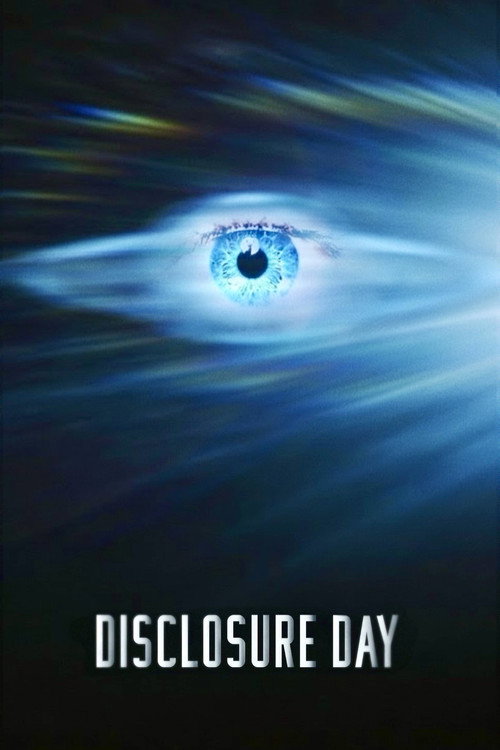
Data sources: FilmDB.co.uk and TMDb. Availability of information may vary, and accuracy is not guaranteed.
MysteryScience FictionThriller146 min