

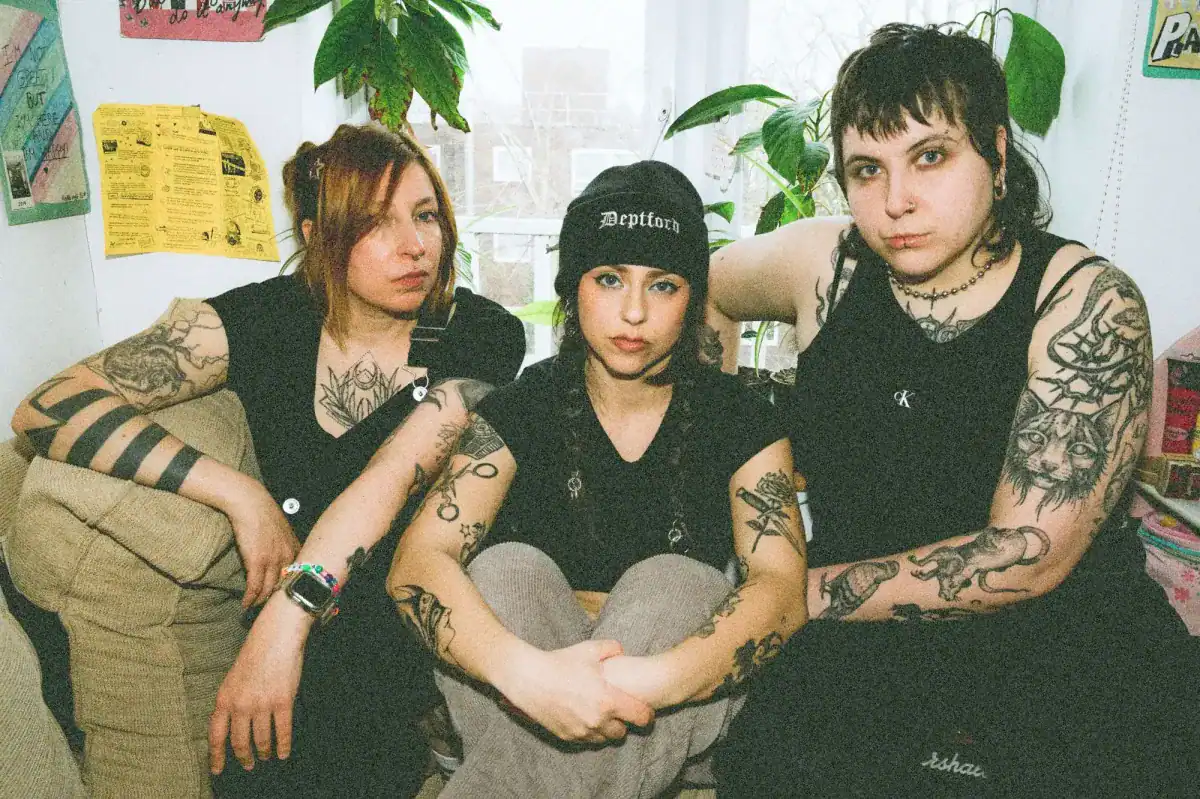
“It’s very hard to make money off it, so might as well have fun, you know.” Right at the end of our chat,Shooting Daggersvocalist/bassistBea Simiondrops that line, and it basically sums up everything: the band, the new recordThe Real Life Thing, the punk ethics, the wrestling, all of it. This is a band living in the space between brutal graft and pure joy, and refusing to give up.
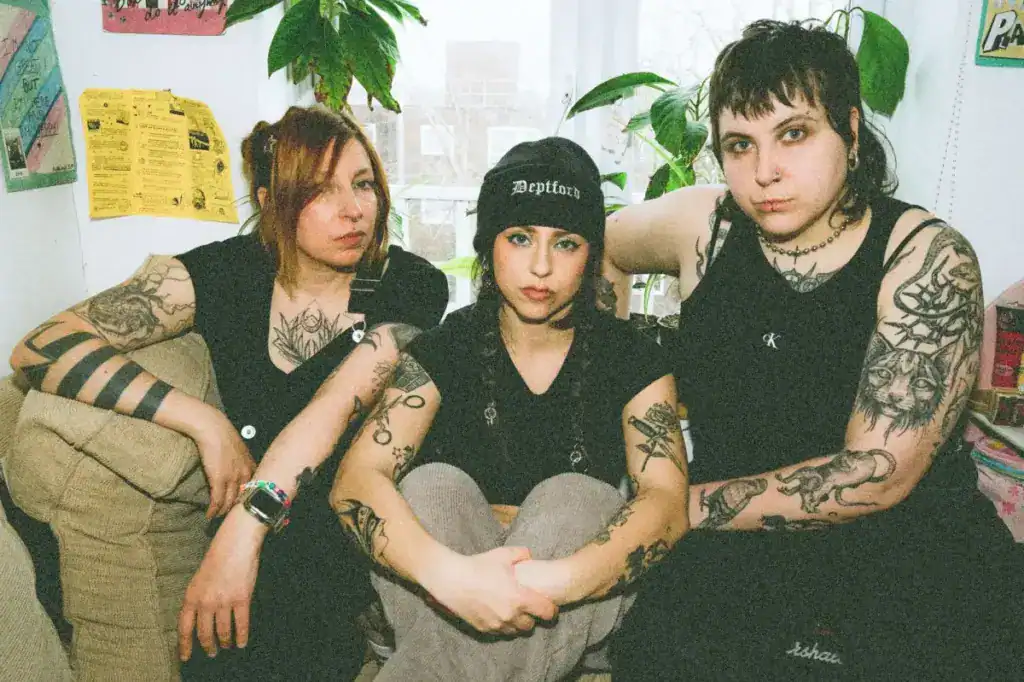
We talk about their new release, working with Dennis Lyxzén from Refused, and why women’s wrestling is basically the best thing on TV right now, in WWE, AEW and beyond. “Now It Feels Proper Real”
With three releases out,The Real Life Thing hits different for Shooting Daggers: “Now that we have three albums out, it kind of feels proper real, like we’re producing stuff,” Bea says. “This third album, mini album, EP, how you want to call it… it almost feels like a continuation of the album before, because the artwork is the same, the vibe is pretty similar.”
That continuity is aesthetic, not restrictive. Genre-wise, they’re still gloriously chaotic. “We keep doing these albums where we just write whatever we want without a real genre in particular,” Bea adds. “It feels great to keep doing that and have a label (New Heavy Sounds) that never restricts us, and people that love it and come to shows.”
Behind the scenes, it’s less carefree. By the time fans hit play on release day, the band are already exhausted. “You’re so caught up in the process: finish the song, record it, mix it, prepare the video, promo the single,” Bea says. “It’s such a process that when it’s finally out you’re like, oh… now what?”
The trick is remembering that, for listeners, this is day one. “It’s a ‘now what’ for us, but a beginning for everyone else,” they say. “We haven’t even played some of these songs live yet. It’s still exciting. We’re already ready to write new music, but it’s good to take time and enjoy the finish.”
Full-time work and then some
Shooting Daggers operate in that horrible-but-relatable space: doing well enough to keep going, not well enough to quit the day jobs. “When your band is doing well enough to continue producing, but not good enough to quit your day-to-day job, that basically means you have two full-time jobs,” Bea says.
Beyond the art is the grind: admin, logistics, content, travel, everything that makes a band function but never gets talked about in the press release. “People don’t see the graft, the grit of producing the artwork, producing the stuff, balancing that with other responsibilities,” Bea explains. “When we’re on stage it all makes sense – holy shit, this is incredible– but there’s that initial bit people don’t see.”
That reality has shaped how they think about the band. If the money’s not the reward, the freedom has to be. “The more you grow, the less you give a fuck,” Bea laughs. “The less you care about being coherent, following a specific path, or meeting people’s expectations. We’re ready to just do whatever we want forever, basically.”
Glow
For us as viewers, “Glow” looks like a carefully engineered moment: a big single, a wrestling-themed video, and a guest spot from Dennis Lyxzén. In reality, it was chaos in the best way. “It wasn’t like, ‘We need a song called “Glow” with a wrestling video and Dennis on it,’” Bea says. “The song was already written with no lyrics when we came back from playing two shows with Refused, which was amazing, unreal.”
Those shows sparked the idea of a feature. “We wanted a feature on the album. At first we thought of a woman, because that fits what we do – broadcasting more women,” Bea explains. “But Dennis was so nice, we aligned on values, and we loved how he moved on stage. We’d only met for two days, but it felt enough to ask. He said yes straight away – and he was really busy.”
The wrestling angle came from somewhere else entirely. “The collaboration is completely unrelated to the wrestling theme,” Bea says. “We noticed the beat had this punchy, almost ‘Eye of the Tiger’ feel. We imagined a fighting situation – at first we were thinking boxing.”
At the same time, Bea had discovered strength training and dragged the rest of the band along. “I got really into strength training, then my bandmates saw how obsessed I was and joined,” they laugh. “We were all obsessed with the gym. So it was like, okay, let’s do a video in a gym.”
The title came after the fact. “When the song was finished we called it ‘Glow’, and then my mind went straight to wrestling,” Bea says.
They shot the video atCommando Temple in Deptford – a non-commercial gym on the same road as their rehearsal space. “They gave us the place for free on a Sunday,” Bea says. “Inside, there was this collective called Strong Queer Strongdoing workshops for queer strong people – really cool. Then I reached out toFist Club, a queer company in London and Brighton that does wrestling shows for LGBT and queer people, women… super funny. They came with their wrestlers to help.”
The result is a video that feels like a punk love letter to queer strength and indie wrestling. “Everyone did it out of love for the idea of doing a music video,” Bea says. “It was one of the most fun days to record. That’s the good part of being in a band.”
“Les Soleil”
For a group known for hardcore punk energy, album track, “Les Soleil” is a curveball: hazy, layered, almost shoegaze. “We’re always open to do whatever we want,” Bea says. “Salomé [Salgado Pellegrin] had this great guitar riff. We tried to turn it into a more structured, maybe Title Fight-type song, but we didn’t like it. It was too happy.”
Instead of forcing it, they leaned into the loop. “In the room we were just playing drums, guitar and bass on loop,” Bea explains. “In the studio we added piano, second guitar, drones… and then Salomé finally decided to sing in French. The song called for French. It just came out like that.”
Originally, it was meant as an interlude. “We thought of it as an interlude at first,” Bea says. “But when Sal brought the lyrics, we were like, this is a perfectly fine track. We love it. I really love that song.”
For Bea, songs like this prove they’re ready to push further. “This album is a confirmation we’re ready to make more complex music and expand our live experience,” they say. “It’s just three of us. We don’t have a second guitarist, a synth player, or a dedicated singer. It takes a lot of work to recreate the record live.”
Instead of holding them back, that limitation forces creativity. “We enjoy taking the songs and making them work live,” Bea says. “Playing live is what we like the most. It’s exciting to be like, maybe we can buy this pedal for that sound, you can add a sample there. I love that process.”
Wrestling As Inspiration
“Glow” isn’t just a gimmick – Bea is deep into wrestling, especially the women’s scene. “When I was a kid, I was a big fan of Eddie Guerrero,” Bea says. “I don’t know why. I was just obsessed as an eight-year-old with that man.”
Like many, they drifted away, then came back during lockdown. “Now I mainly follow WWE, the women’s part,” they explain. “I watch Raw and SmackDown, and sometimes NXT. I used to watch AEW more before WWE went on Netflix. I loved it, it felt a bit more crude, more real. I want to go back to it.”
Current favourites are exactly who you’d expect – and then some. “Of course Rhea Ripley– who doesn’t say Rhea?” Bea laughs. “I loveIyo Sky, she’s one of my favourites. I really like the newNia Jax,Lash Legend… they’re amazing.Becky Lynchis hilarious. I could go on.”
When it comes to matches, one stands out instantly. “I really like the Charlotte Flair vs Rhea RipleyWrestleMania match where Rhea won the title,” Bea says. “It felt like a real passing of the torch. It was beautiful.”
They shout out a triple threat featuring Rhea, Iyo and Bianca Belair, and, obviously, the chaos of the Rumble. “Royal Rumbles are really fun,” Bea says. “They’re the ones you can bring other people into. They’re so silly. I love them.”
That love of wrestling spills into real life too. Bea is quick to plug the scenes that inspire them. “I’d like to plug Fist ClubandEVE Riot Grrrl Wrestling,” they say. “They do shows every month – that’s where I go sometimes. They’re f—ing amazing. Sometimes they even bring WWE wrestlers. They always bring burlesque performers. I think it’s fucking great.”
“We’re Ready To Do Whatever We Want”
Underneath the wrestling chat and the gym stories, Shooting Daggers are still a fiercely DIY punk band trying to make something honest in a brutal landscape. They know they’re working two jobs. They know most of the grind will never be seen. They know it’s hard to make money.
But they also know what they want. “We don’t know – maybe next year we’ll wake up and just want to do one hardcore album,” Bea shrugs. “But that’s part of it. We’re ready to just do whatever we want forever.”
For now, that meansThe Real Life Thing, a wrestling-fuelled video, and a live set they’re constantly levelling up.
Bea’s closing sales pitch is simple and perfectly on brand: “Just come check out our shows… and buy the album,” they grin.
Real life. Real graft. Real fun. That’s the real life thing.