

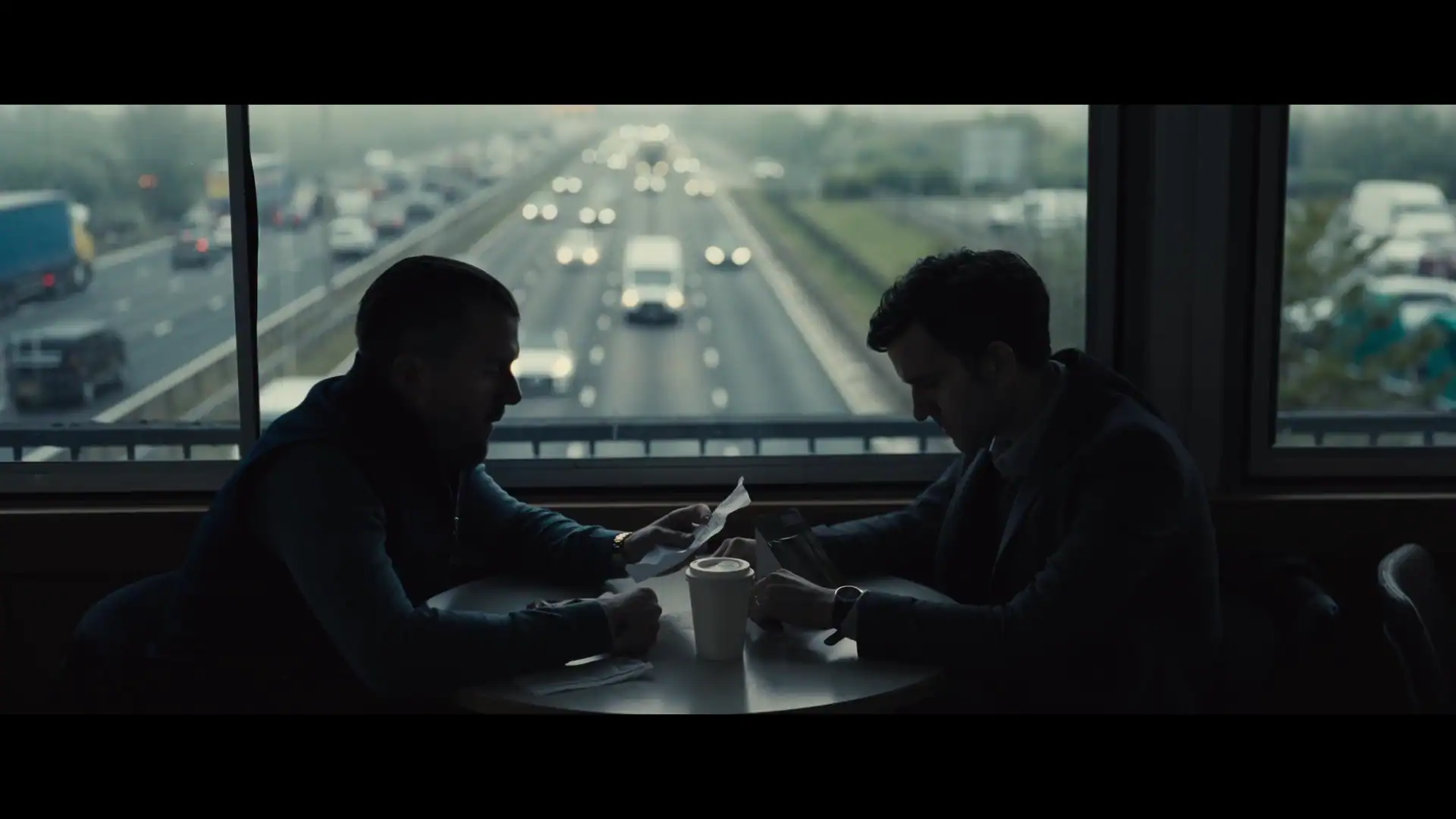
It should come as no surprise, given his starring roles in Game of Thrones and Industry, that Kit Harington’s first foray behind the lens should focus on the bleaker side of life.
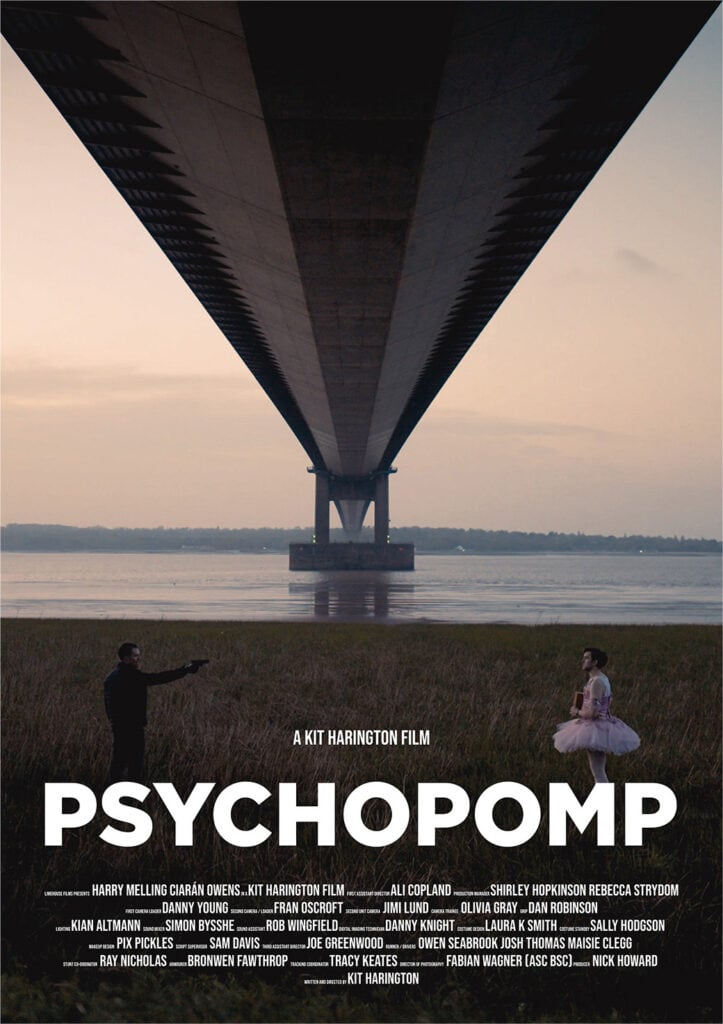
Having dominated TV screens for well over a decade now, between his confrontations with white walkers and the ghouls of the corporate world on HBO, Harington took the blacker-than-tar energy of GoT and Industry’s comedic moments and ploughed them into his directorial debut.
Psychopomp (a creature/demon/angel/spirit entrusted with the responsibility of escorting a newly deceased soul to the afterlife) is a 25 minute existential crisis of a road trip, undertaken by Harry (a wonderfully troubled Harry Melling) and the assassin he has paid to end his life, Liam (a fierce yet empathetic Ciarán Owens).
At the beginning of the pair’s journey across the north of England, Liam lays down the ground rules for Harry’s final trip. Harry is free to change his mind and continue living at any stage, until the final destination. At that point, there is no turning back.
“Once we’re there, that’s it, you understand that?” Liam questions Harry at the break of dawn. “It’s messy” the hitman-for-hire warns.
Indeed, the adventure the pair take is messy as Liam aids Harry in navigating a troubled past that is alluded to through various pitstops. It is perhaps these pitstops that would have been better served in a feature length production rather than a short.
Melling, now a far cry from his days as the spoiled bully Dudley Dursley in the Harry Potter franchise, leaks desperation from every pore in his performance as the suicidal Harry. However, as we are fed nuggets about his life and what has led Harry to his ultimate resting place, there is a frustration of wondering how much more could have been explored and fleshed out of such an excruciatingly interesting character.
As Liam, Owens treads the line between menace and empathy with acute precision. The Irishman, who has previously undertaken roles in Peaky Blinders and Netflix series Spotless, is charming yet chilling as an assassin who would probably rather just enjoy a nice, quiet drive through the Yorkshire countryside with a packed lunch than actually murder somebody. But Owens’ Liam has a code. And a temper that will not suffer any of Harry’s incredulity.
Between them, Melling and Owens make for convincingly unlikely companions as they begin to run out of road. OK, it’s not exactly Steve Martin and John Candy in Planes, Trains and Automobiles, but the heartfelt moments the pair share ache the emotions as Owens’ lends an emotional weight to Liam that makes you root for him just as much as Harry’s lost little boy.
After traversing the beautifully captured moors and rivers and, erm, motorway service stations of Leeds, Kirkstall, Ilkley Moor and Barton-Upon-Humber, it does feel as though Harington could have delved deeper with the story. The stunted run time constrictions of being a short means Psychopomp unfortunately loses a large amount of lustre even if it is still an extremely well executed and, at times, captivating picture.
The nods to Harry’s past and how he, as a happily married man, has arrived at the decision to embark on a death pact road trip with a professional killer, are teased to us rather than explored. The tenderness that is shared between the two characters could be elevated so much further with some more substantial meat on the bones of this piece.
Cinematographer Fabian Wagner, who worked with Harington on Game of Thrones, majestically captures the mundanity of another weekday with every frame of his shoot. Contrasted against the reality of the plan Harry is paying Liam to execute, every howling wind whipping across a field, every body of water, feels both beautiful and ominous with Wagner’s eye on them.
Leeds based production company Limehouse deserve a Cannes Festival level of applause for their work across three days this film was shot in. Harington spoke at the Manchester Film Festival, where the film premiered, about wanting to ‘capture the spirit of the north’ with Psychopomp, and the region has rarely looked better on the silver screen.
“It’s a film rooted in the North of England,”Harington explained to the audience at the opening night of Manchester Film Festival.
Psychopomp shares a very similar spirit to Martin McDonagh’s transcendent black comedy, In Bruges. The absurdity of life and death, the surrealism of human emotion and how regularly it is drawn into conflict is present throughout Harry and Liam’s mission.
In Bruges sees Colin Farrell and Brendan Gleeson arrive in the Belgian city following a gangland hit gone awry. The scene in which Gleeson is casually told by a psychotic Ralph Fiennes that he is actually out there to murder Farrell for accidentally killing a child is produced with such flippancy that you cannot help but bark out an involuntary laugh. Of course, the plan descends into farce when Gleeson sees Farrell about to commit suicide and stops him, despite the fact it would have indeed prevented Gleeson from dealing with the murder himself.
Psychopomp hints at elevating itself to this level of grisly humour, but can never quite fully commit. As the film reaches its climax, it almost feels as if Harington could have committed to so much more with the plot. As such, what we are delivered is something that feels akin to a spoiler heavy, near-half hour trailer for a much better film.

Kit Harington
However, Harington still deserves plaudits for diving into a directorial debut with such a bleakly beautiful project. Melling and Owens are natural opposites, brought together under Harington’s direction, which Owens had nothing but praise for during the post-premiere Q&A.
“Having a director who understands the process of acting like that is worth its weight in gold. Kit has that in spades and he just trusted me and Harry to build a relationship.”
“He gave us the freedom to try things. And that’s always what you want, really, as an actor, to feel that encouragement but to also have a keen eye for the detail that he wanted.”
Harington has described Psychopomp as a ‘proof of concept’ to see if the industry will allow him to continue as a director in the future. Given his eye for a story and how to have it presented on screen, there should be no issue with that. Being able to leave his audience wanting more is also a signifier that the Emmy nominee can enrapture viewers from behind the camera as well as in front of it.
Frustrations over this being a concept better served as a feature length film rather than a short aside, Harington will surely gain the trust of enough people with Psychopomp to return to the director’s chair on several occasions. A solid, sublimely shot first step in a new direction for the Game of Thrones star.
