


The Mandalorian and Grogu has the strange problem of being too good at being safe. It knows where the applause buttons are. It knows when to cut to Grogu. It knows how long Din Djarin can stand in silence before the armor starts doing half the acting for him. What it does not know, or perhaps does not dare to know, is how to make Star Wars feel dangerous again.
Jon Favreau’s big-screen continuation of The Mandalorian arrives in theaters on May 22, 2026, with Pedro Pascal back as Din Djarin and Grogu once again dragged into the messy afterlife of the Empire. The official release details set up a simple enough mission: Imperial warlords still linger, the New Republic needs help, and the galaxy’s most marketable father-and-child duo is called back into service.
That should be enough for a lean, pulpy Star Wars adventure. Sometimes it is. Just not often enough.
Does The Mandalorian and Grogu Actually Feel Like a Movie?
Only in flashes.
When The Mandalorian and Grogu leans into its space-western instincts, it has a pulse. Dusty corners of the galaxy, crooked bargains, blunt violence, odd little creatures, a helmeted gunslinger moving through trouble with almost no wasted speech — that is still the best version of this world. Favreau understands that part. He always has.
The trouble is that the film keeps confusing size with weight.

A bigger screen does not automatically make the story bigger. IMAX does not give a scene tension by itself. A noisy chase, a familiar alien, a callback, a cute Grogu reaction — these things can keep an audience awake, but they do not automatically create momentum. Too much of the film feels assembled rather than discovered. You can almost hear the machinery clicking from beat to beat.
That does not make it bad. It makes it oddly flat for something so expensive.
There are action scenes with shape. There are jokes that land. There are moments where the old Star Wars texture peeks through the polished Disney surface. But the movie rarely gives the feeling that anything truly unexpected might happen. It behaves like a film that has been carefully designed not to upset anyone.
That is a very modern franchise problem. And Star Wars, of all things, should not feel house-trained.
Is Grogu Still the Best Thing in the Room?
Yes. Annoyingly, yes.
Grogu still works because the character cuts through all the noise. He does not need exposition. He barely needs movement. A blink, a tilt of the head, a tiny pause before using the Force — that is often more expressive than the dialogue around him. The film knows this, maybe too well.
The best scenes are not the ones straining to look huge. They are the quieter bits between Din and Grogu, where the movie remembers that this relationship was never just a cute merchandising accident. There is something tender there. Not deep, exactly, but clean. Understandable. A lonely warrior and a strange little child trying to make a family out of survival.
That still has emotional pull.
But Grogu is no longer a surprise. That matters. When he first appeared, he felt like a miracle smuggled into a franchise that badly needed one. Now he is the plan. He is the safety net. When a scene gets thin, the movie reaches for him. When the story starts to feel too mechanical, there he is again, staring upward with those enormous eyes, asking the audience to forgive the emptiness around him.
Most of the time, we do. That may be the most revealing thing about the film.
Pedro Pascal remains effective as Din Djarin, even with the obvious limitations of a character built around armor, voice, and body language. There is a calmness to his performance that still suits the role. Sigourney Weaver gives the New Republic material some authority, although the film never quite gives her the dramatic weight her presence suggests. Jeremy Allen White as Rotta the Hutt is the weirder swing, and at least that choice gives the movie a little grubby flavor. Star Wars needs more grubby flavor. It gets too clean when everyone behaves like they live inside a premium content strategy.
Why Does It Feel Like Disney+ With a Bigger Screen?
Because the story keeps moving forward without ever really deepening.
There is nothing wrong with a straightforward Star Wars plot. Actually, the franchise often works best when the story is clean. A rescue. A mission. A chase. A choice. The problem here is not simplicity. The problem is the lack of friction.
Din and Grogu move through the film like characters who have already survived the most interesting version of their own story. The bond is established. The visual identity is established. The audience affection is established. So the movie has to find a new reason to matter.

It never quite does.
Instead, The Mandalorian and Grogu often feels like a well-funded continuation of a brand rhythm the audience already knows. There is comfort in that. Fans of the series will find plenty to enjoy. The armor still shines. Grogu still charms. The world still has pockets of fun. But comfort is not the same as urgency.
And Star Wars badly needs urgency.
For years, the franchise has been trapped between nostalgia and expansion, between serving longtime fans and trying to create new myth. This film lands somewhere in the middle, careful not to break anything, careful not to move too far, careful not to become the next argument. That caution may help it commercially. It does not help it artistically.
Is the Spectacle Stronger Than the Story?
Yes, and the movie knows it.
The large-scale sequences are cleanly mounted. The film has the kind of visual muscle you expect from Lucasfilm and Disney. Ships move well. Creatures have personality. The Hutt material brings some welcome ugliness. The action is easy to follow, which already puts it ahead of a lot of modern blockbuster noise.
But the spectacle is doing more work than the drama.
There are stretches where the movie looks like Star Wars, sounds like Star Wars, moves like Star Wars — and still feels strangely light. That is the danger of modern franchise filmmaking. The surface can be immaculate while the center stays soft.

Favreau can stage this world. He can make it familiar. He can make it fun. What he does not quite do here is make it feel necessary. The film entertains, then slips away. It gives you the shape of a theatrical event without the aftertaste of one.
That is not a small issue. Star Wars was never just a collection of designs. It was fear, awe, longing, rebellion, failure, faith. Even at its most childish, it had big emotions. The Mandalorian and Grogu has affection, but it rarely has awe.
For more film data, cast information and future availability updates, the title can also be followed through FilmDB.co.uk.
What Do the Budget and Box Office Forecast Say?
Financially, the film enters theaters in a more complicated position than the brand name might suggest.
The reported production budget is currently listed at $165 million, according to The Numbers, which is controlled by modern Disney tentpole standards but still far from cheap. Early long-range tracking from Boxoffice Pro has pointed toward a domestic opening weekend in the $90 million to $100 million range. For most films, that would be a major launch. For Star Wars, it sounds more like a question mark.
That is the uncomfortable part. This movie does not only have to open. It has to prove that Star Wars still belongs in theaters as an event, not merely as a familiar logo blown up to fill a giant screen.
If audiences treat it as a must-see, Lucasfilm gets breathing room. If they treat it as optional homework from the Disney+ era, the problem becomes much bigger than one cautious film.
Does The Mandalorian and Grogu Save Star Wars?
No. But it keeps the lights on.
The Mandalorian and Grogu is watchable, often fun, and sometimes genuinely charming. Grogu still has power. Din Djarin is still one of the cleaner inventions of modern Star Wars. Favreau still knows how this corner of the galaxy should move, and the film has enough spectacle to satisfy audiences who simply want a polished Star Wars adventure.
But it is too careful to feel like a rebirth.
It does not embarrass the franchise. It does not destroy anything. It does not collapse under its own mythology. In a way, that is the point. This is Star Wars playing defense. Competent defense, yes, but defense all the same.
The galaxy is still standing. The helmet is still cool. Grogu is still adorable.
But if this is supposed to be the beginning of a new theatrical era, Star Wars needs more than a cute face and a familiar silhouette. It needs nerve.
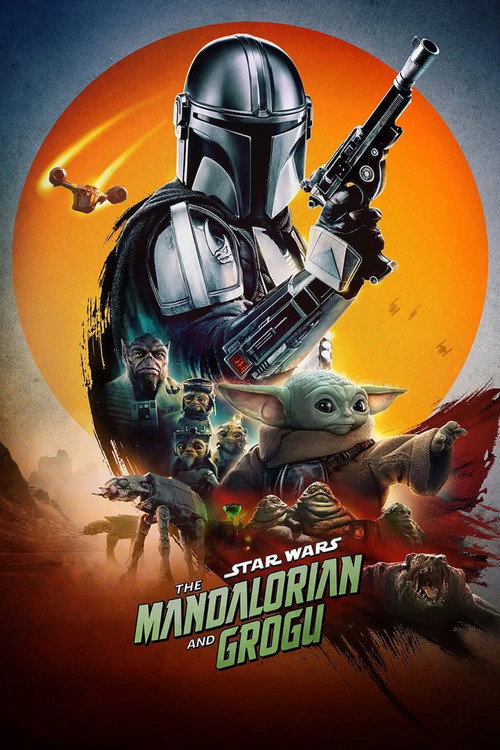
Data sources: FilmDB.co.uk and TMDb. Availability of information may vary, and accuracy is not guaranteed.
AdventureScience FictionAction132 min