

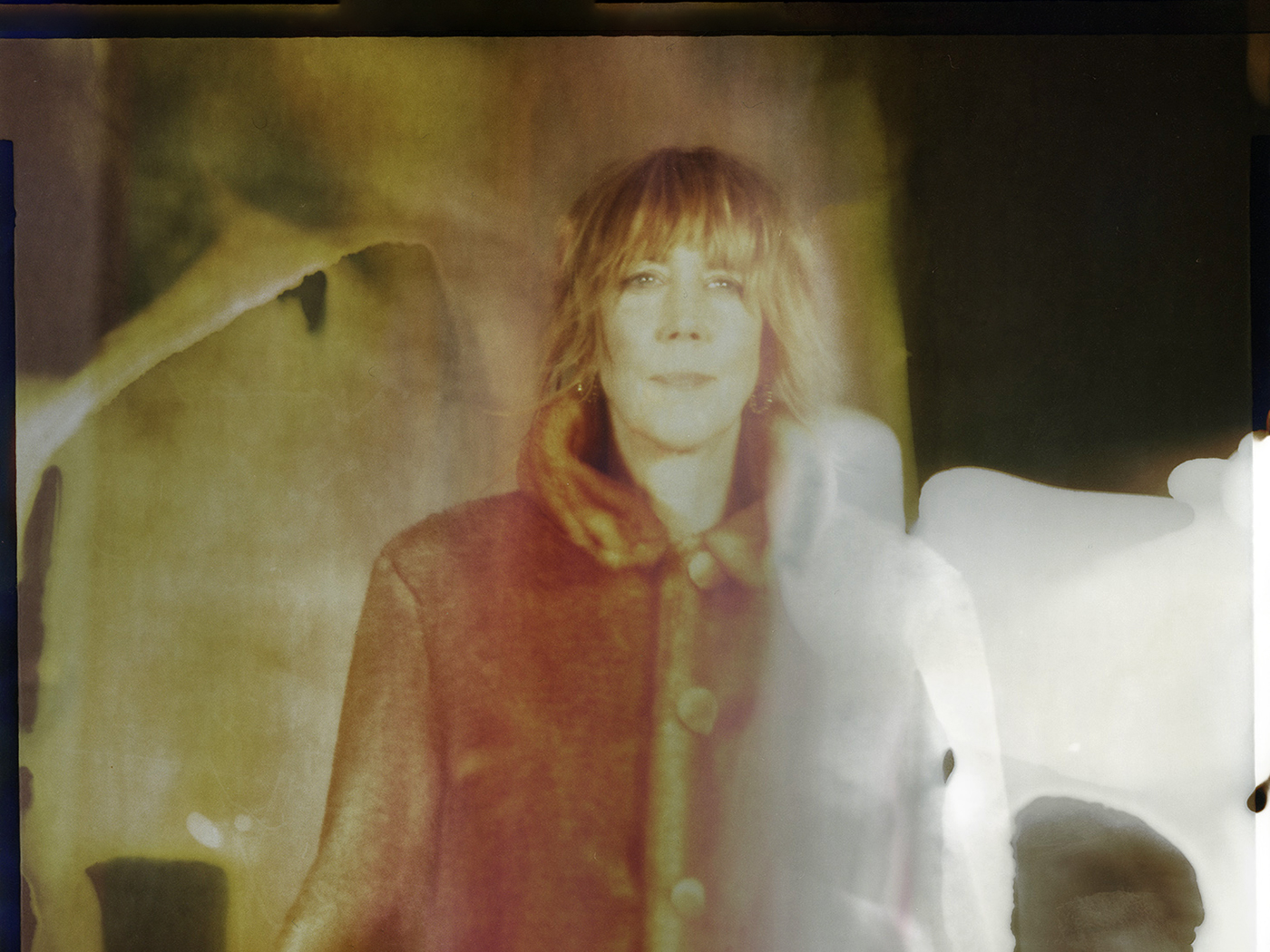
If a title’s purpose is to illuminate an album’s themes, then The Ground Above, Beth Orton’s ninth, suggests she’s been buried alive. Listening, too, for the first time, one fears that’s exactly what’s happened. Once that gentle, languid voice ached with a mere crack on “She Cries Your Name”, and that crack, furthermore, let light in. Three decades later, it trembles and breaks on her new record’s earliest notes. Indeed, this title track initially appears so privately visceral one worries about intruding. Her moans and groans are singular, guttural, even primal, as though they’ve discovered a life of their own.
Arguably, however, Orton has rarely sounded more like herself; and deciphering these lines confirms she’s making peace with her demons, not fleeing them. “I’m as invincible as grief,” she wails, swallowing this striking image in the manner of Mark Hollis. It takes a moment to recognise this is no lament but a candid assertion of triumph, marked by the wisdom of age. “Violent as a blade of spring released,” she elaborates, “ecstatic as a mother’s love.” Orton’s not battling from six feet under. She’s celebrating, albeit in honest fashion, finding her feet again.
She’s been noted before for her veracity. “I can still smell you on my fingers,” she famously confessed on 1999’s “Central Reservation”, “and taste you on my breath”. The Ground Above extends that frankness, its immersive world mirroring her newfound peace while exposing the struggles it demanded. Here, passion and sorrow exist side by side, and to deny these is to deny oneself. Better to be, as that opener declares, “euphoric as a war/ When I know who it is I’m fighting for.” Seldom more vulnerable, never contrived, Orton revels in her strengths.
It helps that she’s fortified by enviable musicians, including Adrian Utley of Portishead (whose Beth Gibbons explored similar instincts on 2024’s Lives Outgrown), The Smile’s Tom Skinner and, his tasteful patience especially commendable, Amy Winehouse’s former pianist, Sam Beste. Among others are The Invisible’s Dave Okumu and Tom Herbert, Nick Hakim, Leo Abrahams, even Orton’s husband Sam Amidon. Each finds their space, whether lurking or shining within Orton’s considerate, considerable production, sometimes redolent of Radiohead’s A Moon Shaped Pool, where detail meant more than volume.
Take “Celestial Light”, Ben Sloan’s drums barely struck amid a silvery mist of Mauro Refosco’s glass marimba, Shahzad Ismaily’s Juno and Beste’s Synthex. They’re an ideally empathetic setting for Orton’s tranquil reveries of death, to whom one day she will “surrender this weight into the sky”. On “I’ll Miss You”, too, she confronts another breed of loss, whispering to shimmering accompaniment in contemplation of an inevitable break-up. “The moon a crumpled paper bag/ The sun a rusted can…” Nothing is what it was.
In contrast, she emerges from “Love You Right”’s Lambchop-like penumbra with Van Morrison’s youthful intensity, howling its heartfelt lines: “For a world that’s cruel/You know you made it kind/And I only ever want to learn to love you right”. On “Cigarette Curls” she’s further invigorated, recalling a young friendship even as she concedes, “Time caught up with me eventually.” Riding its soulful, shuffling rhythm, she’s at one with song and soloists, Abrahams and Utley compelling either side of a bewitching crescendo of horns, strings and Hakim’s backing vocals. If there’s regret in her final lines – “I was running, I was afraid” – there’s certainly no shame.
This appreciation for our increasingly complex emotional survival distinguishes The Ground Above, rendering affecting what might have been arduous. No longer are her tremulous vocals instantly ravishing, but they’re still convincingly, endearingly sincere, born of consequential experience. “I’ve been waiting for the hurting to stop,” she shivers at “Waiting”’s outset, yet this isn’t about pain, rather revelation. From fear’s paralysing warning, “there’s nowhere else that I will ever be,” comes “there’s nowhere else that I would rather be.”
Reflected in Orton’s fondness for pathetic fallacy, The Ground Above honours nature. “The landscape is seeking a language between us,” “Celestial Light” confides, while “the glow of October spills over your shoulder” on the resonant “Love You Right”. “Cigarette Curls”’s soulmate even has “a laugh that comes right out of the dirt”. No wonder she concludes, strength restored, with “Otherside”’s growing gospel strains. Checking first with her loved ones – “Did you make it through?” – she reclaims “All The Young Dudes” for her middle-aged self amid a party of brass and percussion. She cried her name once, but now she affirms, “The world sang back/‘You are alive/You are still here’”. Weary she may be – aren’t we all? – but she’s scarcely been more alive.