


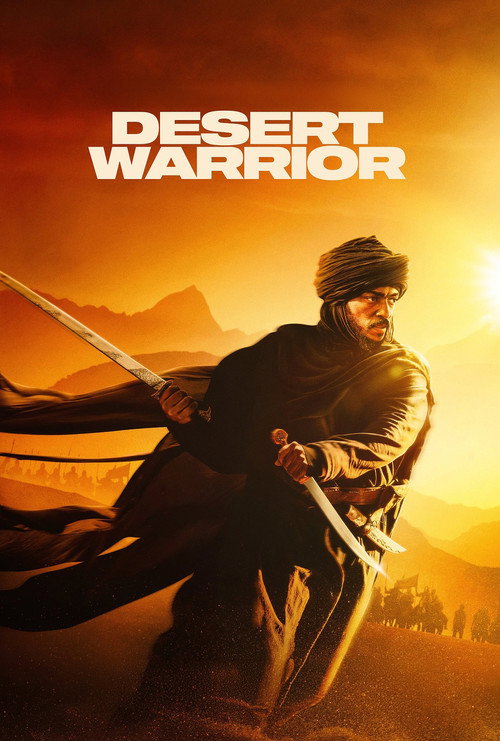
Desert Warrior opened in U.S. cinemas on April 24, 2026 and pulled in $487,848. That is the entire weekend take. Across 1,010 screens. The film cost a reported $150 million to make, which means we are looking at one of the biggest box office bombs of all time playing out in real time.
The Saudi-backed historical action epic stars Anthony Mackie and Ben Kingsley. Almost nobody seems to have noticed it was in cinemas at all.
A Per-Screen Average Almost Nobody Has Ever Matched
Divide the gross by the screen count and you get a per-screen average of $483. To put that into something concrete: a single late-evening showing selling around 35 standard tickets clears that figure. Desert Warrior was failing to do that across more than a thousand auditoriums at the same time.
The number sits below the per-theatre averages of Jem and the Holograms and Rock the Kasbah, both of which were considered career-defining flops when they happened. The film landed outside the domestic top ten entirely. The same weekend, the Antoine Fuqua-directed Michael Jackson biopic broke the record for biopic openings with close to $100 million.
Industry analysts have already slotted Desert Warrior somewhere around twelfth on the all-time worst wide-opening list. In the over-1,000-screens category specifically, it lands around seventh, just behind the Jack Black comedy The D Train. That is not a tier of failure that usually contains $150 million tentpoles.
How a $70 Million Project Doubled in Cost
This was never supposed to be a $150 million film. The original budget came in around $70 million when the project got greenlit, and the final number more than doubled before post-production wrapped four years after the cameras stopped. Whichever way you slice it, that makes Desert Warrior the most expensive film ever produced inside Saudi Arabia.
The cost spiral had several causes. Principal photography happened in Tabuk, near the Jordanian border, with summer temperatures around 49°C and zero existing film infrastructure to lean on. The crew built an inflatable soundstage in a hotel parking lot. A COVID border closure mid-shoot reportedly added $20 million on its own. About 12,500 extras came in from Georgia, Lebanon, and Syria, plus technical crew from forty countries. A meaningful chunk of the budget was simply the cost of building a film industry from scratch around a single project.
Director Rupert Wyatt, who made Rise of the Planet of the Apes, then walked off the film during post-production over creative disputes with MBC Studios, before being brought back later. A Vulture deep-dive into the troubled production describes the four-year tug-of-war between Wyatt’s vision of a nuanced human story and the studio’s preference for a Braveheart-shaped crowd-pleaser. The version that ended up on screens does not really land in either camp.
27% on Rotten Tomatoes, 1.9 on IMDb
Reviews have been brutal. The Rotten Tomatoes score sits at 27%. The IMDb user rating is 1.9 out of 10. That is lower than the much-mocked 2019 adaptation of Cats. Metacritic comes in at 41, which it categorises as “mixed or average.”
Most of the complaints land in the same area. The screenplay does not commit to a tone. Critics could not figure out whether Desert Warrior wanted to be a serious historical drama or an epic in the Lord of the Rings mould or something closer to a Western. Centring a seventh-century Arabian story on an English-language production with a mostly non-Arab cast also drew criticism from both sides. Arab audiences flagged the result as inauthentic. Western audiences appeared not to engage with it at all.
The film’s anti-Persian narrative, which builds toward the Battle of Dhi Qar, also released into a moment of considerable Middle Eastern tension. Several industry observers have pointed to that timing as part of why the audience response was so quiet.
How It Even Got Into Cinemas
Part of the disaster comes down to how Desert Warrior reached theatrical release. The film took close to six years to finish. It premiered at Zurich in September 2025, then screened at Saudi Arabia’s Red Sea International Film Festival in December. No major theatrical distributor stepped forward.
Vertical Entertainment, a small indie distributor that mainly handles direct-to-streaming acquisitions, picked up the U.S. rights in February 2026 for a low-seven-figure fee. Vertical does not have the marketing infrastructure to launch a $150 million epic against a Michael Jackson biopic. Public awareness ahead of opening weekend was, frankly, near zero. Most viewers only learned the film existed once the box office numbers started circulating online as a curiosity.
Where It Sits on the All-Time Bomb List
Identifying the single biggest box office bomb in history is a bit of a parlour game. The Adventures of Pluto Nash, the 2002 Eddie Murphy sci-fi comedy, gets cited most often. It made $7.1 million worldwide on a $100 million budget. The 13th Warrior is the other usual reference: under $62 million worldwide on a budget reported as high as $160 million.
To even reach the Pluto Nash benchmark, Desert Warrior would need a multiplier of more than fourteen times its opening weekend across the rest of its theatrical run. Films with this kind of opening number and this kind of review profile do not produce that multiplier. A second-weekend drop of 60-70% is the realistic baseline, which puts the film below $200,000 in its second frame. Three million dollars domestically would already require a small word-of-mouth miracle.
Some films that flopped commercially go on to become classics once home video and streaming surface them later. The route requires a critical reappraisal that a 27% Rotten Tomatoes score makes hard to picture. International rollout in the Middle East and parts of Europe is the only realistic path to recovering anything, and that depends on regional audiences responding more warmly than the domestic test did.
What This Means for Vision 2030
The strategic damage probably matters more than the financial loss. Desert Warrior was conceived as the flagship demonstration of the Vision 2030 film initiative. The point was to prove that Saudi Arabia’s Neom Media production hub could host Hollywood-scale productions. The point was also to prove that English-language epics could be made there at competitive cost and quality.
Neither point got proved. The shoot in Tabuk drove costs into Hollywood-tentpole range. The finished film could not deliver a Hollywood-tentpole return. Other Saudi-backed projects in development, including the upcoming epic Unbroken Sword, are now reportedly looking at smaller, regionally-focused stories rather than another $150 million crossover swing.
For the moment Desert Warrior is just a stark reminder that infrastructure and ambition and budget can not substitute for a screenplay that connects with someone, somewhere. Whether that lesson holds for the next round of regional film financing decisions will probably set the trajectory of Saudi cinema for the rest of the decade.
Data sources: FilmDB.co.uk and TMDb. Availability of information may vary, and accuracy is not guaranteed.
ActionDramaHistory126 min