

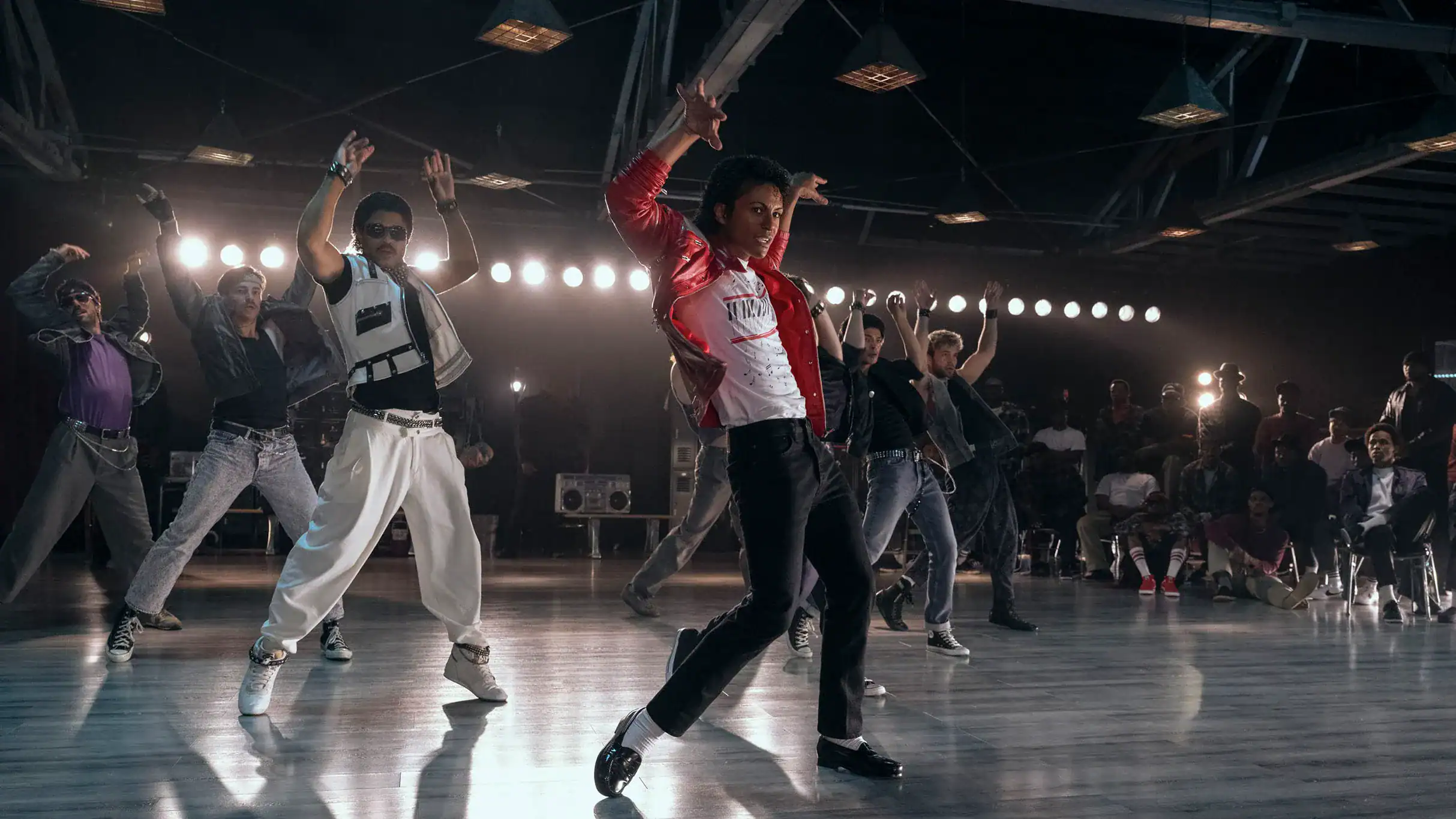
The box office success of Michael (2026), the biography of megastarMichael Jackson, tells you almost everything you need to know about the modern biopic. The film stormed cinemas with a record-breaking $217m global opening weekend. It became the biggest debut in biopic history easily outperformed predecessors like Bohemian Rhapsody and Springsteen: Deliver Me from Nowhere.
In the UK alone, it pulled in £11.6m in its first weekend.And yet, as The Guardian noted, this commercial triumph sits alongside scathing reviews and a persistent sense that audiences are “happy to live in a fantasy”.Michael captures a key ethical question for biopics and asks whether they are explorations of real people, or exercises in PR and brand management?
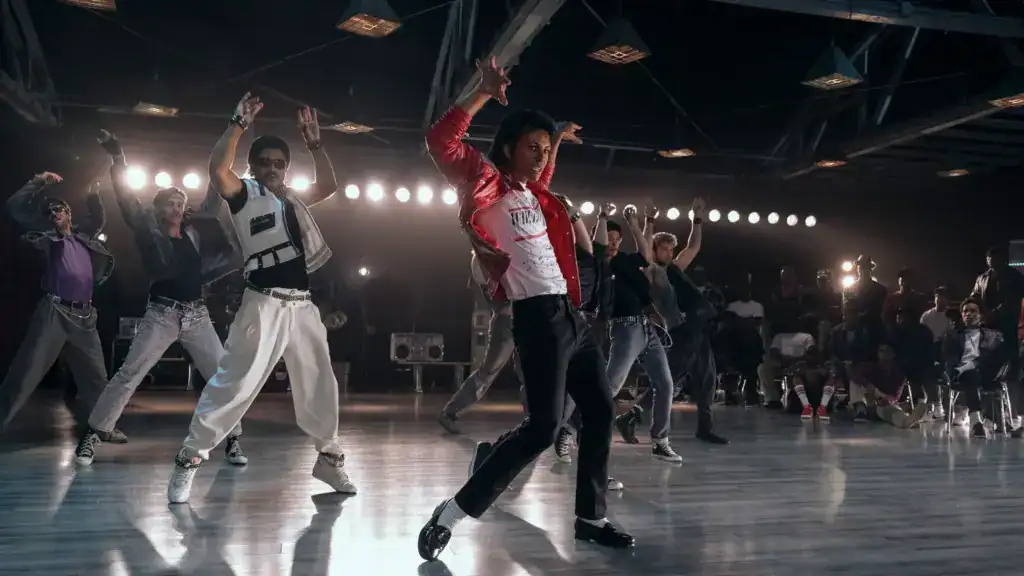
Jaafar Jackson as Michael Jackson in “Michael.” Photograph by Glen Wilson / Lions Gate / Everett
How Biopics Shape the Stories We Remember
According to film and media expert Spencer Murphy, based at Coventry University, the slick and artificial nature of biopics is what keeps audiences coming back to the cinema.
commercial As Murphy puts it, “what audiences are looking for… is kind of inspirational representations,” where the subject becomes “almost an inspirational brand”.
Biopics are often structured to deliver a satisfying, often euphoric climax. Films about musicians, including Michael, tend to follow a familiar narrative arc: struggle in early life, discovery of talent, adversity in the form of addiction or conspiring managers, and triumph. The structure is not attuned to the historical circumstances of the subject’s life.
In other words, the biopic offers a kind of emotional shortcut that blends nostalgia with curiosity. “We’re not interested, particularly, in this being an accurate portrayal,” he explains. “These films take huge liberties with events to create a narrative that leads to a kind of emotional crescendo.”
Biopics as “Inspirational Brands”
Yet when biopics prioritise emotional payoff over complexity, they inevitably flatten the messiness of real lives. Murphy is blunt about this: “these are not historical documents… what we actually get is a very sanitised version.”
The consequences of that sanitisation are particularly stark when dealing with controversial figures. Films backed by estates, whether of musicians, actors, or public figures, often operate under an implicit mandate of protecting the artist’s legacy at all costs.
This is where the ethical stakes of the genre become unavoidable. A biopic might look like entertainment, but it also shapes public memory. When a film chooses what to include, and what to leave out, is influencing how their life story will be remembered.
Murphy sees this as a shared responsibility. Not just for filmmakers, but for audiences too. “The question is about the duty of an audience as well. Why are we watching these movies, and how are we engaging with them?”
Studios, Estates, and the Legal Tightrope
If the ethical terrain is murky, the legal one is even more so. Biopics operate under intense scrutiny, particularly when they involve living individuals or contested histories.
Studios, Murphy explains, must navigate “a football stadium full of lawyers” reviewing scripts line by line to avoid defamation or litigation.
One common strategy is strategic omission, which is adopted by Michael, is ending a story before it enters reputationally risky territory. Another is close collaboration with estates, which can provide both access and protection.
But that collaboration comes with trade-offs. Narratives are rarely neutral when estates are involved. They are curated and often softened to preserve a legacy that extends far beyond the film itself and into streaming numbers and merchandise.
Critics vs Audiences: A Growing Divide
One of the most striking aspects of the current biopic boom is the widening gap between critical and audience responses.
Murphy points to recent examples where critics have been sharply negative, while audiences remain enthusiastic. “It shows you a huge disparity between… what the audience are looking for,” he says.
For studios, this isn’t a problem since they operate a ruthless business model. Box office success matters more than critical consensus. And if audiences are willing to embrace a simplified, celebratory narrative, there’s little incentive to complicate it. This creates what Murphy describes as a kind of “litmus test,” where studios push boundaries just enough to maintain mass appeal without triggering widespread backlash.
The Next Frontier: AI and Biopics
Murphy sees AI as the genre’s most pressing challenge. “The next step is… we don’t have to cast actors,” he says. Instead, studios could use archival material, digital reconstruction, and AI-generated performances to recreate real people on screen.
This isn’t hypothetical. The late James Earl Jones famously signed an agreement allowing his voice to be used posthumously through AI, raising profound questions about authorship and control.
AI could allow filmmakers to reconstruct performances, alter historical footage, or even create entirely new “moments” in a subject’s life. As Murphy points out, technology tends to outpace regulation. “We celebrate how fantastic [these technologies] are and it’s not until they completely consume our lives that we stop and go, hold on.”
Who Really Owns the Biopic?
So where does this leave the biopic? On one hand, biopics remain one of cinema’s most reliable commercial engines. Yet, on the other, Michael also exposes the quiet complicity of audiences with the ruthless instincts of commercial film studios.
Michael’s box office numbers reveal that viewers continue to reward stories that feel good over ones that feel true. The responsibility, then, doesn’t sit solely with studios or estates. It rests with audiences willing to interrogate what they’re being sold.
By ignoring controversy, the biopic risks becoming a mirror of the film industry’s most troubling instincts. The key question for future biopics is a moral one: can biopics still tell stories that feel like truth, or will they always just be good business at a bad cost?