

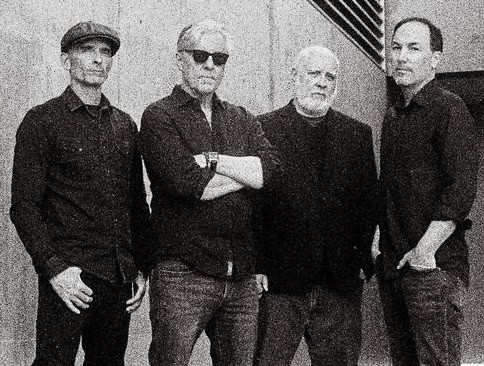
There’s a warmth and an easy laugh to Doni Blair that makes you forget, for a second, that you’re talking to the bassist of one of the great cult rock bands of the last three decades. Toadies are gearing up for a mammoth run of US shows, powered by their new album The Charmer, recorded with the late, legendarySteve Albini.
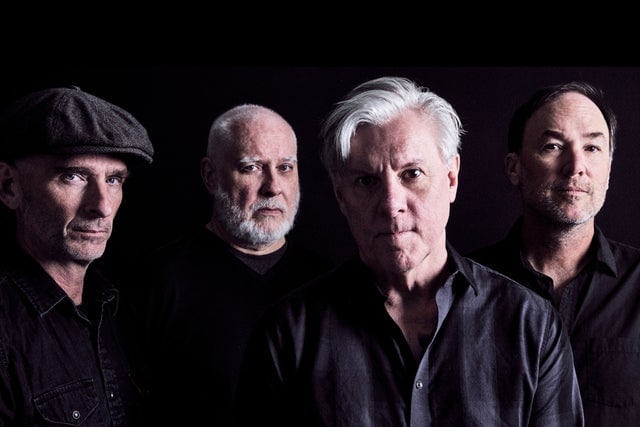
For Doni, who joined the band around2008, this record isn’t just another entry in the discography – it’s the moment where everything fully clicked. It’s also a chance to speak openly aboutmental health, the band’slegacy, and the deep connection they’re still building with listeners, from longtime devotees to kids discovering them for the first time.
“We Went in More Prepared Than Ever”, he says. Before Toadies even set foot in Albini’s studio, they were meticulous. Demos, tour-testing, refining – the groundwork was done long before tape rolled. “We really, really worked hard before we even went into Steve’s,” Doni explains. “We played it on our last tour. We probably picked two or three songs, we just really demoed the hell out of it and knew what we were going to do, because we knew Steve liked immediacy.”
That sense of immediacy shaped the whole process. The band wanted to be so prepared that the basics wouldn’t get in the way of creativity once they were in the room with Albini.“We kind of went in probably the best I think we’ve ever had for any record that I’ve been part of,” he says. “We knew we weren’t gonna screw around.”
The result is a record that feels bothclassic Toadiesand totally alive in the present – dark, angry, but sharpened, emotionally precise and sonically huge.
Favourite songs
For all ofThe Charmer’s grit and tension, Toadies chose to close the record with one of its most delicate, affecting moments: “In Bandages” – a favourite of mine, and a song with an origin story that’s pure Toadies. “I believe it was the last song written,” Doni recalls. “Vaden had gone for a haircut, and I was going to bed one night, and he sent us this story… ‘Hey, I was going for a haircut today, and I turned my head and the guy put his scissors in my… fucking face.’”
That surreal, painful little moment somehow bloomed into a calm, beautiful closer. “A week later, he gave us the demo to ‘In Bandages’. Like, are you kidding me?” Doni laughs. “I think our thinking was, end it with that – end it kind of with a little… because the record is so angry and dark, and it just had this really nice, calming, beautiful song.”
It’s a wound and a balm at once – a fitting way to close a record that grapples with heaviness, but never gives in to it.
A Steve Albini Story
Recording withSteve Albiniis the stuff of rock folklore, and Doni’s experience cuts straight through the mythology. Toadies didn’t get a tyrant – they got a brutally honest, funny, no-bullshit collaborator who felt like one of them.
OnThe Charmer, one of Doni’s standout tracks is “Come to Life”, a song he pushed hard to get on the record. It became a kind of miniature epic. “After the song comes back in, we’ve never put that much work into probably 30 seconds of music,” he says. “All of the backing vocals he did… we were kind of looking at each other like, ‘I don’t know if this is gonna work.’ And then he sat down, and Steve played the entire thing as one, and we just couldn’t believe it.”
Albini’s own ideas could be wonderfully abrupt – and occasionally, unintentionally hilarious. Doni tells a story about “In Bandages” and an early mix: “On the first one, whenever we mixed it, Steve wanted to mix it Ramones-style – bass on the left, hard left, everything on the right,” Doni remembers. “So we went back, and he was remixing it, and I said, ‘Hey, do you want to do the same mixing you did with… we’ll go Ramones?’ And he goes, ‘The hell are you talking about?’ I said, ‘You said you wanted to mix hard left and right, that’s the bass.’ ‘Okay, I don’t care.’ And I was like, ‘Dude, it’s your fucking idea, Albini.’”
The story says everything you need to know: he cared deeply about the work, but not at all about the ego. “Steve’s gotten a bad rap from people,” Doni says. “But I think it’s people who had thin skins and couldn’t take him being brutally honest and not caring that they’re this or that. He didn’t give a shit. Just come in, do your work. If he gave us an idea, we either took it or we didn’t. He didn’t care either way. We felt like he was one of us. We just got along with him perfectly. It was a dream come true.” For Toadies,The Charmerwith Albini wasn’t just another session – it was a late-career gift, a chance to push themselves with someone who demanded immediacy and truth.
From Side Guy to Equal Member
When Doni came into Toadies in the late 2000s, he wasn’t immediately slotted in as a fully-fledged equal. “I started off as pretty much just like the side guy,” he says [0:08:39]. “They didn’t know where things were going to go. And over time, they’ve let me in, basically, to be an equal member of the band. And that right there has given me confidence… that they saw that, like, ‘Oh, wow, we want this guy in.’”
His evolution with the band is as much personal as musical. Coming from punk backgrounds, he had to relearn how to think about sound and dynamics. “Playing with them has made me 10 times the musician I was,” he admits. “I used to [be in] punk bands beforehand and playing with my fingers. I wasn’t adaptable. I didn’t understand dynamics. I didn’t understand those kinds of things.
Playing with the guys has just made me see so many different things about music and playing.” He also learned something more subtle: boundaries. “When I got in the band, I was like, ‘Hey, we’re all gonna go do this,’ and they were pretty cool with, like, ‘No, I’m not doing that,’” he laughs. “Like, ‘Oh shit, you can do that. You don’t have to be a gang.’ I mean, we are, but… they’ve taught me so much being with them.”
Now, he’s not just holding down the low end – he’s actively pushing songs, shaping arrangements, and, in the case of “Come to Life,” even helping carve out what he calls a “little symphony”.
The Toadies family
Ask Doni what keeps a band like Toadies together this long, and he doesn’t launch into some mythic narrative – he talks about 30 minutes before showtime. “Every night before a show, we have 30 minutes just to ourselves,” he says. “No one else is involved, no one else can come into the room. And we basically spend the whole time just laughing and cracking on each other and cracking up and just doing dumb shit. That’s how we stay together.”
It’s a small ritual, but a powerful one. That mixture of camaraderie and controlled chaos keeps the band grounded and connected. “We have a really good relationship. We really do,” he adds. “We’re very lucky to get along so well.”
That bond also plays a role in their creative process – especially when it comes to overthinking. Doni is candid about his own tendency to spiral in the studio. “He knows I overthink everything,” Doni says of Vaden. “He’s like, ‘Just do it.’ And, ‘Alright. Done. We’re done.’
We all overthink everything. So we have to – the three other ones – whoever’s overthinking everything, the other three have to go, ‘Hey, don’t. You’re overthinking it. That is fantastic.’ And then step back and go, ‘Okay, great. You’re right.’ We have to do that to each other pretty much.”
That give-and-take – the honesty, the banter, the shared trust – is the quiet engine behind Toadies’ longevity.
Talking Mental Health: “There Shouldn’t Be Any Stigma. At All.”
One of the most powerful currents running underThe Charmerand recent Toadies activity is the focus onmental health– including work supporting organisations likeHi, How Are You?and amplifying conversations around emotional wellbeing.
Doni speaks about it with a mix of conviction and vulnerability. “I think it’s brave as hell for [Vaden] to talk about it,” he says. “He’s trying to get rid of that stigma so everyone can be open. And that’s what I think it all… it’s just communication, and it’s just being open, like, ‘Hey, I’m going through this,’ and someone else that’s watching them kind of goes, ‘Oh, crap, I’m doing the same thing.’ It gives them a door to, like, ‘Oh, it’s okay to talk about that.’ That’s the whole point.”
For Doni personally, communication is a survival mechanism. “I’m the kind of person that I wear my heart on my sleeve,” he says. “I communicate, probably over[-much] with everyone. I tell the people in my life I love them, what they mean to me. I tell the guys that… I tell my wife I love her. I tell my brother, I tell my friends.
That helps my mental health.” He’s brutally honest about the consequences of not talking. “If I’ve wronged someone, I have to apologize. I don’t want there to be bad blood with anything. I hate… because we can all do that, and it just kind of sets into our guts and our brains and turns to poison if you don’t communicate,” he says. “I struggle with that stuff – trying to be a good human.”
At the heart of it is a simple but radical idea: your brain deserves the same care as your body. “If they realize that there’s no stigma, then they will go get help,” he continues.‘Yeah, I went and got help. I have to go, I can’t do something, I’ve got to go talk to my therapist,’ or, ‘I have to go get my prescription.’ Like, good. Same as, I gotta take my vitamins, I’ve got to go to the gym. They’re all the same. They should be all the same. There’s no stigma over going to the gym. There’s no stigma over taking your vitamins. There shouldn’t be stigma over taking medicine if you need it. There shouldn’t be stigma over going to a therapist. No one should be stigmatized for that. At all.”
In a climate of rising costs, political tensions and global uncertainty – in both the US and the UK – that message carries real weight.
Legacy, Cult Status and “Really, Really Good Songs”
Ask any band aboutlegacyand you’ll usually get a cautious answer. For Doni, who spent time outside the band as a fan before joining, the view is sharper: Toadies are acult band in the best possible sense. “I think the legacy of the band is just good songs,” he says simply [0:10:44]. “I think we’re just a consistently solid rock band. We try to go out and give people…
Everybody’s in tight these days, especially in America with everything going on and gas prices – don’t get me started. But we appreciate everybody coming out, so we know they’re spending hard-earned money.” That awareness of what fans sacrifice to show up – tickets, travel, babysitters, time – shapes how Toadies approach every show. “If they’re leaving their kids, if they’re gonna take an Uber – all these things take money,” Doni says. “They’re coming in, they’re buying merch, they’re buying tickets, they’ve already got the record. They’re giving us their time and years off their life. The least we can do is be rehearsed and give them a great show and give them really good records and good songs.”
And if you need proof that the songs are still landing, just look at the crowd. “Whenever I joined the band, and for a while, it was people our age who remembered the 90s,” he explains [0:12:44]. “And now we’re seeing so many younger people who don’t just like ‘Possum Kingdom’ or ‘Tyler’. They’re screaming for ‘Long Time’. They’re screaming for stuff like ‘Hell Below/Stars Above’. They know the lyrics, and that is so pleasing… that we’re not just a band that’s appealing to people our age. It’s appealing to people who are old enough to be our kids.”
In other words: the longevity isn’t an accident. It’s the product of craft, graft, and a stubborn commitment to writing songs worth screaming back. “I think that is our legacy, pretty much – just really, really good songs,” Doni says. “Vaden is a hell of a songwriter… and I’m just trying to live up to what the band has done beforehand.”
“Just Hang On” – A Message for UK Fans
For UK fans, Toadies have always had thatcult band aura – the group you worship, that somehow never quite comes around as often as you’d like. Doni knows that, and he’s both apologetic and hopeful.“We appreciate [UK fans], and hopefully we’ll be able to see you next year,” he says early in our conversation [0:00:03]. “We’re working on some… we went a few years back, but it didn’t work out. It wasn’t great shows. I mean, we had fun playing, but we want to try and come back over proper.”
Behind the scenes, there are serious efforts happening. “Right now… Space Flight are really trying to get us over there next year,” Doni continues [0:00:03]. “They’ve been talking about it, and we’re incredibly excited to do it. So just hang on.”
And if/when they do make it over, there’s a promise attached: it’s going to beworth the wait. “We’re happy to have this record out,” Doni says, reflecting on The Charmer[0:22:50]. “I think this is probably my favorite record we’ve done since I joined the band. I love them all, but this one just hit it.
I think we were lined up on all gears… and every night we’re doing the same thing. We’re gearing up, and we’re kind of killing it. This is a busy year for us. We appreciate everybody supporting us – and not just, ‘Oh, I got your new record, it’s pretty cool.’ They’re really invested in it. And we can see them at night doing that. Hopefully we’ll be able to do this in England.”
For a band that’s weathered scenes, eras and industry chaos, Toadies in 2026 are doing what they’ve always done:writing great songs, playing their hearts out, and trying to make people feel a little less alone– whether that’s in Texas, Yorkshire, or anywhere in between.
Until they make it back to the UK, Doni’s message is simple: “hang on – we’re coming”.